
Plants
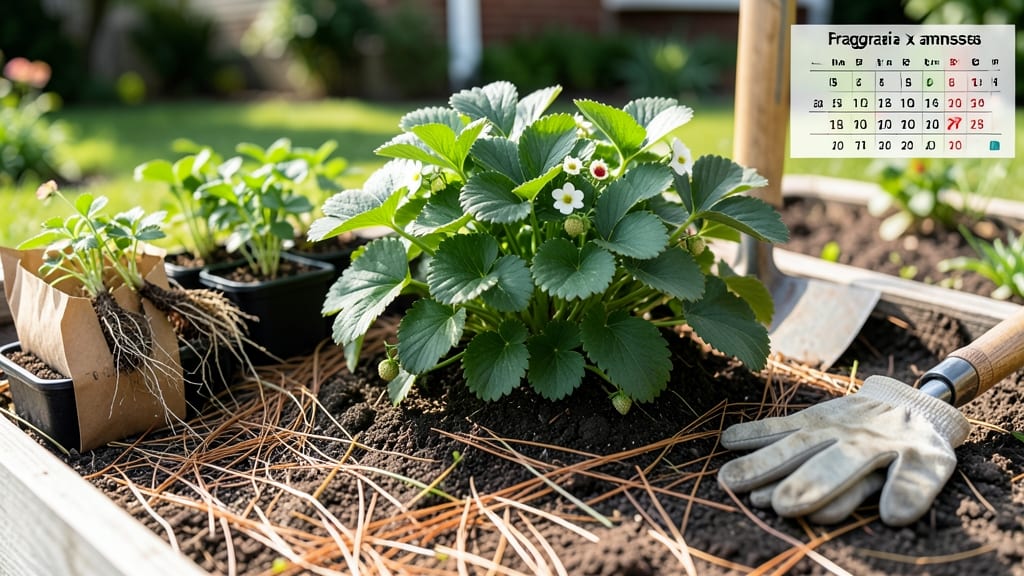
Planting strawberries in North Carolina at the wrong time can mean the difference between a bountiful harvest and wasted effort. The key isn't just the calendar—it's matching your variety to the region's chill hours and frost patterns, whether you're in the Piedmont's cooler valleys or the Coastal Plain's milder climate.
For most gardeners in zones 6b-8a, the sweet spot is early spring (March-April) or late summer (July-August). But here's the catch: June-bearing varieties need 500+ chill hours, while everbearing types thrive with just 300-400 hours.
Get this wrong, and you might end up with berries that never ripen—or worse, plants that freeze before fruiting.
I've tested different planting windows across North Carolina, and what works in Asheville's higher elevations fails in Raleigh's flatter terrain. Let me show you exactly when to plant each type for zero-frost success, plus how to adjust for your microclimate.
By the end, you'll know not just when to plant, but how to protect your 🍓 strawberries from late frosts and maximize your yield. Ready to grow berries that actually produce?
North Carolina strawberry planting dates by chill-hour requirements
Timing your strawberry planting in North Carolina depends on chill-hour needs and regional frost dates. The state’s three main climate zones—Coastal Plain, Piedmont, and Mountains—each have unique planting windows to ensure frost-free harvests.
For example, June-bearing varieties need 500-900 chill hours, while everbearing and day-neutral types thrive with 300-600 chill hours.
In Coastal NC (zones 8a-8b), where winters are milder, you can plant everbearing varieties as early as February for fall harvests or July-August for spring harvests.
Meanwhile, Piedmont (7a-7b) and Mountain (6b-7a) regions require March-April planting to avoid late frosts, which can hit as late as April 1 in Asheville.
Chill hours are the number of hours below 45°F a plant needs to flower. For example, Chandler (June-bearing) needs 700-900 chill hours, while Seascape (everbearing) thrives with 300-500 chill hours. Matching your variety to your zone ensures optimal fruiting and zero frost damage.
Here’s how to align your planting with North Carolina’s regional chill-hour zones and frost dates:
| Variety Type | Chill-Hour Needs | Best Planting Months (NC Regions) | Harvest Window | Frost Risk |
|---|---|---|---|---|
| June-Bearing | 700-900 hours | March-April (Piedmont/Mountains) February (Coastal) |
Late May-June | High (late frosts) |
| Everbearing | 300-600 hours | March-April OR July-August | June-July (spring) + Sept-Oct (fall) | Moderate (fall frosts) |
| Day-Neutral | 300-500 hours | July-August (Coastal) March-April (Piedmont/Mountains) |
June-October (continuous) | Low (extended season) |
For June-bearing varieties, plant in early spring (March-April) to ensure flowers develop during the cool spring and fruit matures before summer heat. Everbearing and day-neutral types offer flexibility: plant in spring for summer harvests or late summer for fall/winter harvests.
In Mountain NC, where frosts linger until April 15, opt for late-March planting of June-bearing varieties like Chandler or Allstar. In Coastal NC, where winters are milder, everbearing Seascape can be planted as early as February for a fall harvest.
Use row covers or cold frames to protect early plantings from late frosts. For example, if a March 15 frost is forecasted in your area, delay planting until April 1 to avoid damage. Always check your local frost dates using the NC State Climate Office for precision.
Pro tip: Bare-root plants can be planted 2-3 weeks earlier than potted varieties, as they establish roots faster in cooler soil. Potted plants, however, are more flexible and can be planted throughout the season as long as soil temps are above 40°F.
For zero-frost success, aim to plant 4-6 weeks before your last frost date. In Raleigh (7b), this means March 1 for June-bearing varieties, while in Greenville (8a), you can plant February 15.
Adjust based on your microclimate—sheltered spots may frost 1-2 weeks later than open areas.
Finally, mulch heavily (4-6 inches) after planting to insulate roots and retain moisture. This is especially critical in drought-prone Piedmont or hot Coastal regions where soil can dry out quickly. Straw or pine needles work best for strawberries.
North Carolina strawberry planting dates by chill-hour requirements
North Carolina’s diverse climate—from the Coastal Plain to the Mountain region—means strawberry planting dates vary dramatically. The key factor? Chill hours, the number of hours below 45°F your plants need to flower and fruit.
June-bearing varieties typically require 300-900 chill hours, while everbearing and day-neutral types need fewer (200-500 hours).
For Piedmont and Coastal areas (e.g., Raleigh, Fayetteville), aim for March 15-April 15 for spring planting. In the Mountains (Asheville, Boone), where winters are colder, plant March 1-April 1 to avoid late frosts.
Summer planting works too—try July 15-August 15 for a fall harvest, but only in warmer microclimates.
| Variety Type | Chill Hours Needed | Best Planting Window | Harvest Time | NC Region Fit |
|---|---|---|---|---|
| June-Bearing | 600-900 | March 15-April 15 | May-June | Piedmont, Mountains |
| Everbearing | 300-500 | March 1-April 15 or July 15-August 15 | April-June & Sept-Oct | Coastal Plain, Piedmont |
| Day-Neutral | 200-400 | March 15-April 15 or July 1-August 15 | May-November (continuous) | All regions |
Pro tip: Use row covers if planting early (before March 15) to protect from late frosts. In Coastal NC, where winters are milder, you can even plant everbearing varieties in February for an early spring harvest.
Just monitor your local frost dates—Charlotte’s last frost is usually March 15, while Asheville’s can linger until April 1.
For summer planting, focus on July-August to avoid the brutal July heat. Water deeply 2-3 times per week and use shade cloth (30-50%) if temperatures exceed 90°F. Day-neutral varieties like Seascape thrive in these conditions, producing fruit until first frost.
Remember: Bare-root plants need immediate watering after transplanting, while potted strawberries can wait a few days. Amend your soil with compost and a balanced fertilizer (10-10-10) at planting to give your berries a head start.
Mulch with straw or pine needles to retain moisture and suppress weeds—critical in NC’s humid summers.
Timing isn’t just about the calendar—it’s about matching your variety to your microclimate. Test your soil’s chill hours using a chill-hour calculator (like the one from NC State Extension) to fine-tune your schedule. With the right timing, you’ll enjoy sweet, frost-free strawberries from spring through fall! 🍓