
Trees
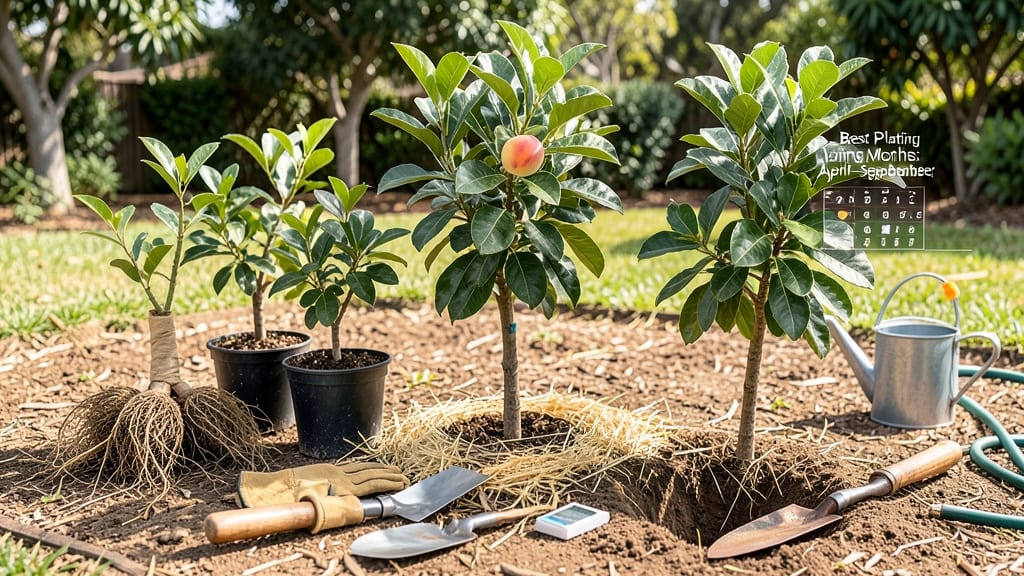
Planting fruit trees 🍎🍊🍑 at the wrong time in South Africa can mean waiting years for that first harvest—or worse, losing your investment to frost or drought.
The key to success lies in understanding your region’s climate, because what works in frost-prone Johannesburg won’t cut it for coastal Durban’s humid warmth.
Most gardeners assume spring is the only safe window, but the truth is more nuanced. In USDA zones 9a-11, the ideal planting season actually stretches from May through September—cooler months when trees establish roots before summer’s heat stress.
But here’s the catch: citrus thrives with early planting, while stone fruits need that winter dormancy period.
Let me show you exactly when to plant in your specific area, from the Western Cape’s Mediterranean climate to the Limpopo’s subtropical heat. We’ll cover soil prep, frost risks, and even how container planting changes the timeline—so you can avoid those costly mistakes and get fruiting faster.
Ready to turn your backyard into a productive orchard? I’ll walk you through the science-backed planting calendar that’s already helped thousands of South African growers maximize their harvests—without the guesswork.
Best planting months for fruit trees by South Africa’s climate zones
South Africa’s diverse climates mean the best time to plant fruit trees varies dramatically from the frost-prone Highveld to the coastal subtropics. In temperate regions like the Western Cape, aim for May to July to avoid winter frosts.
Meanwhile, subtropical areas like KwaZulu-Natal can plant year-round, but spring (September–November) yields the best results. Tropical regions like Limpopo have no frost risk, so rainy season alignment (October–December) is key.
Citrus trees thrive when planted in winter (June–August) across most regions, while stone fruits like peaches need early spring (August–September) to establish roots before summer heat. Avocados, sensitive to cold, should go in late spring (October–November) in cooler zones.
Understanding your USDA zones (9a–11) helps narrow down the window—coastal areas (zone 10a+) have longer frost-free periods.
| Region | Climate Type | Best Planting Months | Key Considerations |
|---|---|---|---|
| Western Cape (Cape Town) | Mediterranean | May–July (winter) | Avoid frost; citrus thrives here |
| KwaZulu-Natal (Durban) | Subtropical | September–November (spring) | Year-round possible; align with rains |
| Highveld (Johannesburg) | Temperate | June–August (winter) | Frost risk; protect young trees |
| Limpopo (Polokwane) | Tropical | October–December (rainy season) | No frost; mangoes thrive here |
For bare-root trees, winter planting (June–August) is ideal nationwide—roots establish before spring growth. Container-grown trees, however, can go in spring (September–October) to avoid transplant shock. In coastal areas, where winters are mild, spring planting (September–November) works best for tropical varieties like lychee or guava.
Always check your local frost dates—Johannesburg’s last frost averages June–July, while Cape Town rarely sees frost. Use mulch (5–10cm) to protect roots in colder zones. In water-scarce areas, plant in winter to reduce irrigation needs during establishment.
Citrus trees in acidic soils (pH 5.5–6.5) need lime amendments before planting, while stone fruits prefer slightly alkaline soil (pH 6.0–7.0). Test your soil 4–6 weeks before planting to adjust nutrients. Compost or well-rotted manure improves drainage in clay-heavy soils common in Gauteng.
Young trees planted in optimal months can bear fruit in 2–5 years, depending on the variety. Avocados take the longest (4–6 years), while citrus may fruit in 2–3 years with proper care.
Always choose disease-resistant varieties suited to your region—e.g., Sassari avocado for coastal areas or Cara Cara oranges for inland zones.
If you miss the ideal window, spring planting (September–October) is the next best option for most regions. Just be prepared for extra watering and shade protection during summer. Container-grown trees adapt better to off-season planting than bare-root varieties.
Pro tip: Use mycorrhizal fungi at planting to boost root growth—especially in sandy soils like those in the Eastern Cape. This natural soil additive improves water and nutrient uptake by up to 30% in the first year.
🌱
Critical factors that determine fruit tree planting success in SA
South Africa’s diverse climate means soil type and frost risk are non-negotiable when planting fruit trees. Inland regions like Johannesburg face late-winter frosts (May–July), while coastal areas like Durban enjoy frost-free growing year-round. Always check your local frost dates—planting citrus in frost-prone zones after September risks winter dieback.
Your soil pH matters just as much as timing. Most fruit trees thrive in slightly acidic to neutral soil (pH 6.0–7.0). Citrus, for example, needs acidic soil (pH 5.5–6.5), while stone fruits like peaches prefer neutral to slightly alkaline (pH 6.5–7.5).
Test your soil before planting—amend with lime to raise pH or sulfur to lower it.
Water availability is another game-changer. Young trees need consistent moisture—deep watering 2–3 times per week in summer, but established trees like macadamias tolerate drought once rooted. In water-restricted areas, opt for drought-tolerant varieties like pomegranate or fig, which thrive with minimal irrigation.
Finally, container vs. ground planting changes the rules. Container-grown trees dry out faster and need larger pots (minimum 60cm diameter) with drainage holes. Ground-planted trees benefit from deep soil preparation—amend the top 30–45cm with compost and organic matter to improve drainage and fertility.
Pro tip: Stake young trees if planting in windy areas (common in coastal regions like Cape Town), but avoid over-tightening—roots need room to spread. Mulch with straw or wood chips to lock in moisture and regulate soil temperature.
Remember, local microclimates matter more than general rules. A north-facing slope in Pretoria might be 5°C warmer than the valley below—adjust your planting schedule accordingly. When in doubt, ask your local agricultural extension office for soil and frost data tailored to your exact area.