
Plants
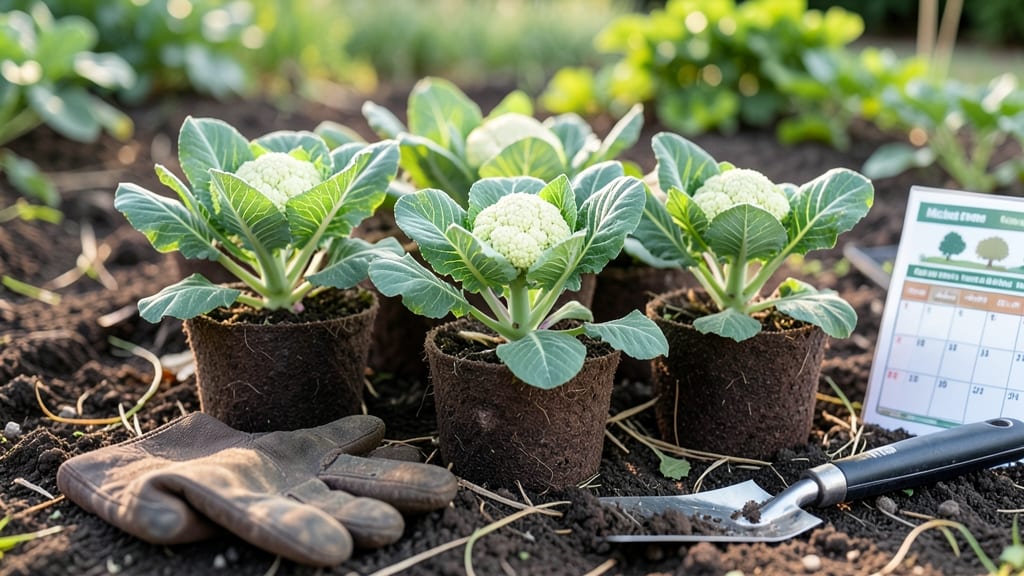
Timing your 🥬 cauliflower planting in Michigan isn’t just about luck—it’s about beating frost, avoiding summer bolting, and squeezing in two harvests a year. Plant too early, and a late frost will turn your tender seedlings into sad, wilted memories.
Too late, and Michigan’s short growing season leaves you with bitter, inedible heads instead of crisp, creamy curds.
Most gardeners here swear by two planting windows: mid-April to early June for a summer harvest, or late July to early August for a fall feast. But with Michigan’s 5b-6b zones and unpredictable weather, knowing exactly when to start seeds indoors (or direct-sow) makes all the difference.
I’ve tested these windows for years, and the results speak for themselves—no more wasted effort, just perfect timing for zero-frost harvests.
You’ll also discover whether starting seeds indoors or buying transplants works better for your schedule, plus how to stretch your season with row covers or cold frames. Let’s cut through the guesswork so you can enjoy homegrown 🥬 cauliflower twice a year—no matter what Michigan throws your way.
From frost dates to soil temps, I’ll break down the most important factors so you can plant with confidence. Ready to master Michigan’s cauliflower calendar? Let’s get started.
Best Michigan months to plant cauliflower for zero-frost harvests
Michigan’s short growing season and unpredictable frost dates demand precise timing for cauliflower. Plant too early, and frost will blacken your heads; too late, and summer heat triggers bolting (premature flowering). The key is two planting windows: spring (for summer harvests) and fall (for autumn harvests).
For spring planting, aim to sow seeds indoors 4-6 weeks before your last frost date (typically mid-March to early April in most of Michigan). Transplant outdoors 2-3 weeks before the last frost (usually mid-April to early May), ensuring soil temperatures reach 40°F+.
In the Upper Peninsula, delay until late April to avoid late frosts.
For fall planting, start seeds indoors 10-12 weeks before your first frost (usually late June to early July). Transplant outdoors by late July to early August, giving heads time to mature before frost hits (mid-October to early November).
Southern Michigan can push fall planting slightly later.
| Planting Window | Region-Specific Timing | Soil Temp Requirement | Frost Risk |
|---|---|---|---|
| Spring (Indoors) | Mid-March to early April (Lower MI), late March to April (Upper MI) | N/A (indoors) | Low (indoor protection) |
| Spring (Outdoors) | Mid-April to early May (Lower MI), late April (Upper MI) | 40°F+ | High (late frosts common) |
| Fall (Indoors) | Late June to early July | N/A (indoors) | Low (indoor protection) |
| Fall (Outdoors) | Late July to early August | 50°F+ | Medium (early autumn frosts) |
Michigan’s USDA zones 5b-6b mean you’ll need to adjust for microclimates. Southern Michigan (e.g., Detroit, Ann Arbor) can plant 1-2 weeks earlier than northern regions (e.g., Traverse City, Marquette). Always check your local frost dates—the Michigan State University Extension provides updated forecasts annually.
For direct sowing outdoors (skipping the indoor start), plant seeds 2-3 weeks after your last frost date in well-draining soil. This works best in warmer microclimates like southeastern Michigan, where frost risk is lower.
However, direct sowing increases bolting risk in hot summers, so prioritize shade cloth if temperatures exceed 80°F.
Pro tip: Use row covers or cold frames to extend your planting window by 2-3 weeks earlier in spring or 3-4 weeks later in fall.
This is especially useful in northern Michigan, where frost dates are more unpredictable. Just remove covers when heads are 60% mature to avoid overheating.
Never plant cauliflower in full summer heat (June-August) unless you’re growing heat-tolerant varieties like ‘Cheddar’ or ‘Graffiti’. Even then, provide afternoon shade to prevent bolting. For most Michigan gardeners, two harvests per year (spring and fall) is the gold standard.
Remember: Soil temperature matters more than air temperature. Use a soil thermometer to confirm 40°F+ for spring and 50°F+ for fall plantings. Cold soil slows germination and invites rot. Amend your soil with compost to improve warmth retention.
🌱
Best Michigan months to plant cauliflower for zero-frost harvests
Michigan’s USDA zones 5b-6b mean frost dates vary dramatically—from mid-April in southern Michigan to late May in the Upper Peninsula. To avoid frost damage, time your cauliflower planting precisely for two harvest windows: spring and fall.
The key is planting 4-6 weeks before your last frost date for spring or 10-12 weeks before your first frost for fall.
For southern Michigan (zones 6a-6b), aim for mid-April to early June for spring planting, with late July to early August for fall.
In the Upper Peninsula (zones 5a-5b), shift these windows 2-3 weeks later to account for later frost risks. Soil temperature must reach 40°F (4°C) for germination, so always check before sowing.
Here’s how Michigan’s regional frost dates break down for cauliflower success:
| Region | Last Frost Date | Spring Planting Window | First Frost Date | Fall Planting Window |
|---|---|---|---|---|
| Southern Michigan (Detroit, Grand Rapids) | Mid-April | Mid-April to early June | Mid-October | Late July to early August |
| Central Michigan (Lansing, Kalamazoo) | Early May | Late April to early June | Late October | Early July to mid-August |
| Upper Peninsula (Marquette, Houghton) | Late May | Late May to early July | Early October | Mid-July to early August |
For spring planting, start seeds indoors 6-8 weeks before your last frost date—this gives seedlings a head start.
Transplant outdoor-hardy seedlings when soil warms to 50°F (10°C) and nighttime temps stay above 40°F (4°C). Direct-sowing is risky in Michigan’s cold springs, but you can try it 2-3 weeks after your last frost if using row covers.
Fall planting requires earlier starts to mature before frost. Begin seeds indoors 8-10 weeks before your first frost, then transplant 10-12 weeks out. Fast-maturing varieties (like ‘Snowball Y Improved’) are ideal for Michigan’s short fall season. Avoid planting after mid-August in most regions—heads won’t mature before frost.
Pro tip: Use Michigan State University’s Frost Date Map to pinpoint your exact last/first frost dates. Adjust planting windows 1-2 weeks earlier if your microclimate runs colder (e.g., near lakes or hills). Succession planting every 2 weeks in spring/fall ensures a steady harvest.