
Plants
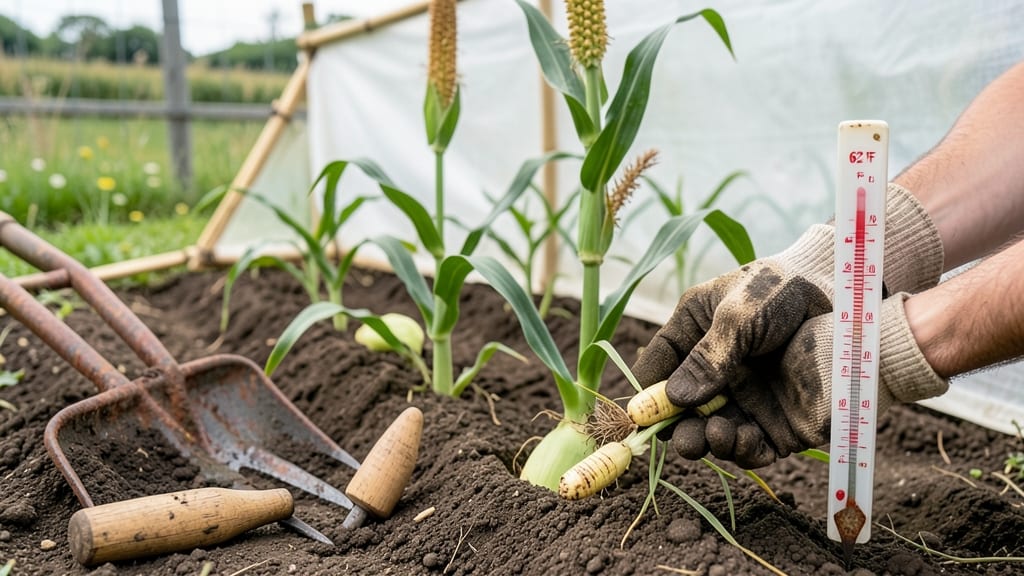
Planting corn in Ohio isn't just about grabbing seeds and sticking them in the ground—it's about timing those 🌽 kernels just right to avoid frost damage while maximizing your harvest.
With Ohio's 6a zone and unpredictable spring weather, knowing the exact frost-free windows by variety can make or break your garden's success.
Most Ohio gardeners aim for mid-April to early May, but that's just the starting point. The real secret lies in waiting for soil temperatures to hit at least 60°F—a critical factor that varies yearly.
Whether you're growing sweet corn for summer meals or field corn for livestock, getting this timing right ensures your plants thrive from planting through harvest in July to September.
I'll walk you through Ohio's regional variations—from Toledo's warmer microclimates to Cincinnati's cooler pockets—and show you how to adjust your planting schedule using local frost data. You'll also discover common mistakes that even experienced gardeners make, and how to avoid them to get the most out of your corn crop.
Ready to transform your Ohio garden into a corn-producing powerhouse? Let's dive into the exact planting windows, soil prep tips, and variety-specific advice that will have your corn reaching for the sky—just in time for harvest season.
Ohio corn planting deadlines by frost dates and variety type
Ohio’s unpredictable spring weather makes timing critical for corn success. Unlike other crops, corn thrives in warm soil (60°F+) and long growing seasons, so planting too early risks frost damage while late planting shortens harvest windows.
The average last frost date across Ohio ranges from mid-April in southern regions to early May in northern areas, but microclimates—like Toledo’s warmer zones or Cincinnati’s valleys—can shift these windows by 1-2 weeks.
Sweet corn, field corn, and popcorn each have unique maturity timelines, meaning their planting deadlines differ. For example, early-maturing sweet corn (like 'Silver Queen') can tolerate later starts, while long-season field corn (like 'Pioneer Brand 33B38') demands an earlier, frost-free window.
Ohio’s USDA Zones 5-6 further complicate timing, as northern counties (e.g., Cleveland) face later frost risks than southern ones (e.g., Dayton).
Key rule: Plant corn after soil warms to 60°F and 2 weeks before your last frost date. Use a soil thermometer—corn seeds won’t germinate below 50°F, and cool soils invite rot. In Ohio, this typically means late April to early May for most gardeners, but adjust for your microclimate.
Ohio’s three distinct regions—northern (e.g., Toledo), central (e.g., Columbus), and southern (e.g., Cincinnati)—experience frost dates that can vary by up to 2 weeks. For instance, Toledo’s last frost averages April 10, while Cleveland’s lingers until April 25.
Use the Ohio State University Extension’s frost maps to refine your timeline, or add 70 days to your first frost date to estimate your harvest window.
Pro tip: Stagger plantings every 10-14 days for a continuous harvest. For example, if you plant 'Silver Queen' on April 25, follow with a second batch on May 10 to extend your fresh corn supply into late August.
This works especially well for home gardens where space is limited but yield variety is desired.
For emergency late starts, opt for short-season varieties like 'Early Sunglow' (65 days) or 'Peaches and Cream' (70 days). These can tolerate June plantings in southern Ohio, though yields may drop.
Pair with row covers to protect young plants from unexpected May frosts, which aren’t uncommon in Ohio’s Zone 5-6 transitions.
Remember: Corn is a heat-loving crop, and Ohio’s summers are its ally. Planting too late risks immature ears before the first frost (mid-October in most areas). Balance soil warmth, frost dates, and variety maturity to maximize your 165-day frost-free window.
🌽
How to calculate your local corn planting window in Ohio
Ohio’s spring weather can be as unpredictable as a toddler’s mood—one day sunny, the next a surprise frost. To nail your corn planting window, you’ll need more than just a calendar.
Start by checking the USDA Plant Hardiness Zone Map for your area (most of Ohio falls in Zone 5b-6a). Then, pull up the Ohio State University Extension’s frost data—their average last frost date for your region is your first clue.
For example, Toledo typically sees its last frost around April 15, while Cincinnati averages April 20. Columbus sits smack in the middle at April 18.
But remember, these are just averages—last year’s late April frost caught more than a few gardeners off guard. Always have a frost cloth on hand for emergencies!
🌱
Don’t overlook microclimates—your backyard might be warmer than the official zone average. South-facing slopes or urban areas (like Columbus’s downtown) can be 2-3°F warmer than rural fields. If you’re near a large body of water, like Lake Erie, expect cooler soil temps to linger longer.
For a foolproof backup, plant a few extra seeds in a protected microclimate (like a cold frame) 1-2 weeks earlier. This way, if your main batch gets nipped by frost, you’ll still have a small harvest to enjoy.
And always keep an eye on the 10-day forecast—if a cold snap is predicted, delay planting until temps stabilize.
☀️