
Companion Plants
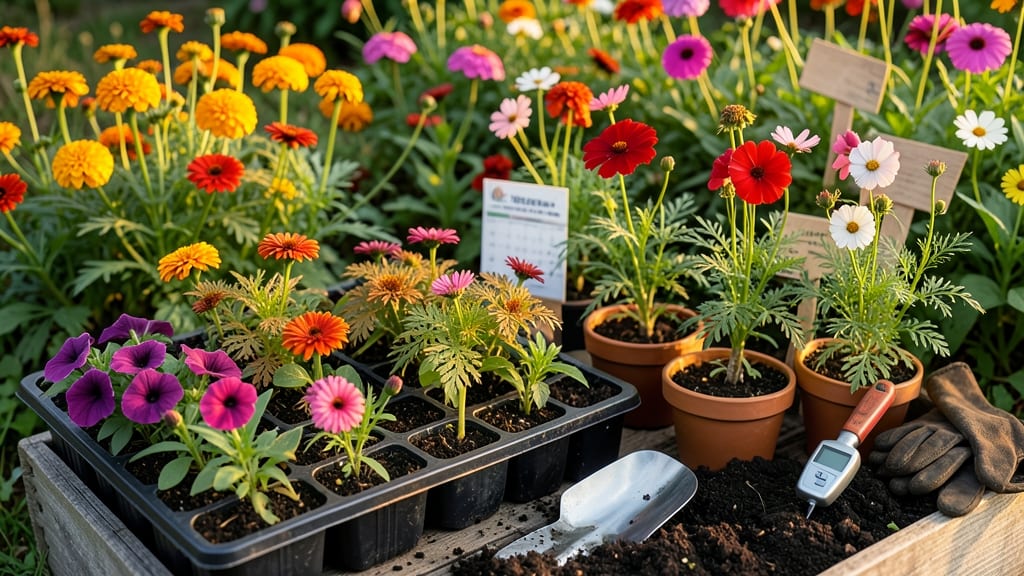
Planting annuals in Zone 5 at the wrong time can turn your dream garden into a frost-killed mess—so knowing when to plant annuals in Zone 5 is the difference between stunning blooms and wilted disappointment.
The key? Timing it just right after the last frost, when soil temperatures hit 60°F and your 🌸 friends like marigolds and zinnias can finally thrive.
Most Zone 5 gardeners wait until mid-April to early June, but that’s not a one-size-fits-all rule—cool-season annuals like pansies can handle early planting, while tender varieties like tomatoes need to wait until late May or June.
Missing the window by even a week can leave your plants struggling in unpredictable spring frosts, so let’s break down the exact timing for your favorite annuals.
You’ll learn how to read frost-free averages, adjust for your local microclimate (like urban heat islands or high-altitude zones), and even push your growing season with cold frames or row covers.
Whether you’re sowing seeds or transplanting seedlings, this guide ensures your annuals get off to the strongest start—no guesswork, just reliable growth.
From marigolds that love the heat to snapdragons that tolerate cooler temps, we’ll cover the best planting windows for every type of annual in Zone 5. Ready to turn your garden into a year-round showstopper? Let’s get started.
Zone 5 last frost dates & exact weeks to plant annuals by category
Zone 5’s short growing season demands precision—planting annuals too early risks frost damage, while waiting too long cuts blooms short. The average last frost date falls between April 15 and May 15, but your exact timeline depends on whether you’re growing cool-season or warm-season annuals.
Cool-loving plants like pansies can handle light frosts, while tender varieties like marigolds need consistent warmth.
For reliable results, use local frost predictions (check the National Weather Service or Almanac) and adjust for your microclimate. Urban areas may warm faster than rural spots, while high-altitude zones (e.g., Denver) often experience later frosts.
Start with 4–6 weeks before your last frost for cool-season plants and wait until after May 15 for heat-lovers.
| Plant Type | Planting Window | Soil Temp Requirement | Notes |
|---|---|---|---|
| Cool-Season Annuals | 4–6 weeks before last frost (March–April) | 45–60°F | Pansies, Snapdragons, Lettuce, Kale |
| Warm-Season Annuals | 2–4 weeks after last frost (May–June) | 60–70°F | Marigolds, Zinnias, Tomatoes, Basil |
| Fall-Blooming Annuals | 8–10 weeks before first frost (August) | 55–65°F | Cosmos, Sunflowers, Aster |
| Tender Annuals (Risky) | After May 30 (or use row covers) | 70°F+ | Petunias, Geraniums, Impatiens |
*Adjust dates 1–2 weeks earlier for high-altitude Zone 5 (e.g., Colorado) or later for urban heat islands (e.g., Chicago).
Pro tip: Seed packets often list days to maturity—subtract this from your first frost date to find your planting deadline. For example, if your first frost is October 15 and cosmos take 90 days to bloom, plant them by July 15 for fall color.
This math ensures you maximize your 150 frost-free days in Zone 5.
Don’t overlook succession planting—sow fast-growing annuals like bush beans every 2 weeks from May through July to stretch your harvest. Pair this with row covers to extend the season by 2–4 weeks in spring or fall.
For example, planting spinach under a cover in late March can yield edible greens by April 15, beating the average last frost.
Watch for false springs—those warm spells in March that trick you into planting early. Tender annuals like tomatoes or peppers can’t survive a late frost, even if they’ve sprouted.
Harden off seedlings indoors until you’re 100% sure the coast is clear. Use a soil thermometer to confirm temps are stable above 50°F before transplanting.
For regional adjustments, Minneapolis gardeners should aim for May 10 as their last frost cutoff, while Pittsburgh’s average is May 5. High-altitude zones (e.g., Denver) may delay planting until June 1.
Always err on the side of caution—one late frost can wipe out a season’s worth of work.
Test your soil’s readiness with the finger test: Push your hand 2 inches deep into the soil. If it’s cool and damp (not cold or soggy), it’s safe for planting.
Pair this with a local frost calendar (available from your Cooperative Extension Service) to fine-tune your schedule. Remember: Zone 5’s margin for error is slim—plan ahead!
🌱
Zone 5 last frost dates & exact weeks to plant annuals by category
In Zone 5, your planting window for annuals is short—typically just 150 frost-free days—so precision matters. The average last frost date falls around April 15, but this varies by 5–10 days depending on location (e.g., Minneapolis vs. Pittsburgh).
For warm-season annuals like marigolds or tomatoes, wait until soil warms to 60°F (usually mid-May), while cool-season plants like pansies can handle March sowing under frost cloth.
Fall planting is equally critical: Start warm-season annuals (e.g., cosmos, bush beans) in late July–early August to harvest before the first frost (~October 15). Use a frost prediction tool like the National Weather Service to adjust your schedule dynamically.
📅 Pro Tip: Bookmark your local Cooperative Extension Service frost dates—Minneapolis averages May 5 for last frost, while Pittsburgh leans toward April 25. Even a 10-day difference can ruin tender seedlings!
| Plant Type | Zone 5 Planting Window | Soil Temp Requirement | Frost Tolerance |
|---|---|---|---|
| Cool-Season Annuals | March 15–April 30 (spring) / Aug 1–Sept 15 (fall) | 45–55°F | High (e.g., pansies, lettuce) |
| Warm-Season Annuals | May 15–June 15 (spring) / July 1–Aug 10 (fall) | 60–70°F | Low (e.g., tomatoes, impatiens) |
| Tender Annuals | June 1–July 1 (after all risk of frost) | 70°F+ | None (e.g., geraniums, basil) |
For succession planting, sow fast-growing annuals like bush beans or radishes every 2 weeks after your initial planting date. This stretches your harvest window by 4–6 weeks, ensuring continuous blooms or edibles.
For example, plant marigolds on May 15, then again on June 1 and July 1 for staggered color.
Remember: Microclimates matter. A south-facing wall can warm soil by 10°F, letting you plant 2 weeks earlier than the average last frost date. Use a soil thermometer to confirm readiness—60°F is non-negotiable for warm-season starters like peppers.
🌱 Key Takeaway: Zone 5’s short season demands strategic timing. Cool-season annuals get a 2-month head start, while warm-season plants must wait for soil warmth and frost-free guarantees. Plan now to avoid the June rush!