
Plants
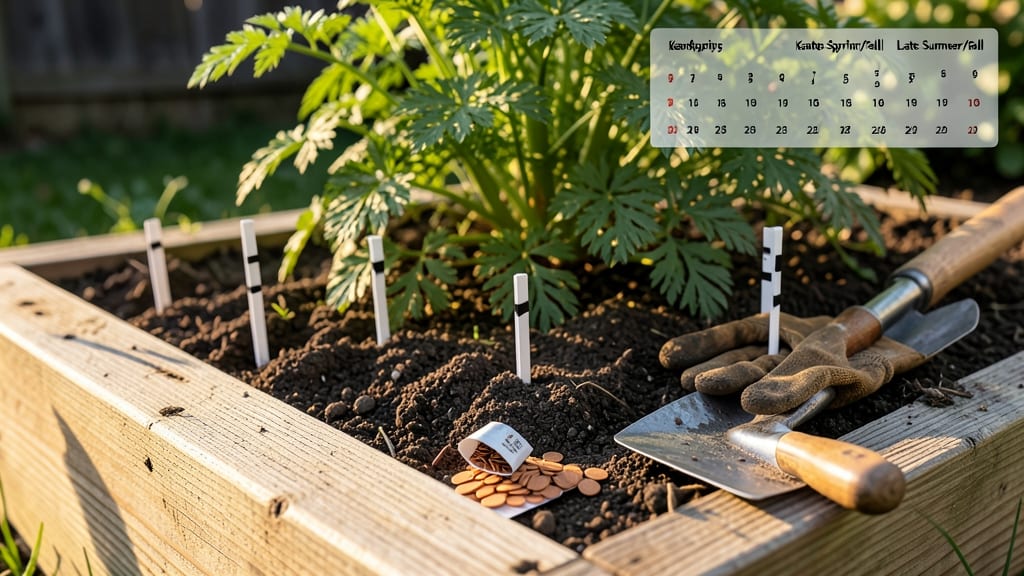
Planting carrots in Kentucky at the wrong time means either waiting forever for crisp roots or watching them bolt before harvest—neither of which you want after all that garden planning.
The key to success lies in timing your seeds perfectly between March and April for spring, or August to September for fall, when soil temperatures and daylight align just right for germination.
In Kentucky’s USDA Zone 6a, where last frosts typically arrive around March 15 and first frosts hit by November 15, those narrow windows become even more critical.
Too early, and cold soil stalls growth; too late, and frost ruins your 🥕 harvest before you even taste those sweet roots. The solution? Plant when soil reaches 50°F—that’s usually late March for spring and early August for fall.
But here’s the game-changer: most gardeners miss the mark by focusing only on calendar months instead of soil conditions. I’ll show you exactly how to test your soil’s readiness and adjust your schedule for Kentucky’s unpredictable weather—so you can enjoy homegrown carrots from May through November without stress.
Ready to transform your garden from hit-or-miss to consistently crisp? Let’s dive into the exact steps to time your carrot planting like a pro, including how to stretch your harvest season with smart succession planting—no more wasted seeds or bolted greens in sight.
Best planting months for carrots in Kentucky’s climate zones
Kentucky’s USDA zones 6a-7a create a unique challenge for carrot growers—cool springs, hot summers, and unpredictable fall frosts. To avoid bolting (premature flowering) or frost damage, timing is everything.
I’ve planted carrots here for years, and the ideal windows are late March through April for spring and mid-August to September for fall.
Carrot seeds need soil temperatures between 60-70°F to germinate properly. In Kentucky, this typically aligns with mid-March for northern counties (like Lexington) and early March for southern regions (such as Bowling Green).
Always check your local average last frost date—most of Kentucky falls between March 15 and April 15.
For spring plantings, aim to sow seeds 4-6 weeks before your last frost date. This gives roots enough time to mature before summer heat stresses them. In fall, plant 8-10 weeks before the first frost (usually mid-October harvest in most areas).
Pro Tip: Use a soil thermometer to confirm temperatures—cold, wet springs can delay germination for weeks. I once waited until April 10 in Louisville, and my carrots thrived because the soil was finally warm enough.
Kentucky Carrot Planting Timeline by Season
| Season | Planting Window | Soil Temp Requirement | Key Risks | Best Varieties |
|---|---|---|---|---|
| Spring | Late March - Early April | 60-70°F | Bolting from heat, poor germination in cold soil | 'Danvers Half Long', 'Nantes' |
| Late Spring | Mid-April - Early May | 55-65°F | Pests (carrot rust fly), uneven growth | 'Paris Market', 'Rainbow' |
| Fall | Mid-August - Early September | 60-75°F | Frost before harvest, woody roots | 'Chantenay', 'Golden Yellowstone' |
| Late Fall | Late September - Early October | 50-60°F | Slow growth, frost damage | 'Little Finger', 'Short 'n Sweet' |
🌱 Note: Adjust dates 1-2 weeks earlier for southern KY (warmer microclimates) or later for northern KY (cooler zones).
Kentucky’s humidity and clay-heavy soils demand extra attention. I’ve found that loosening soil with compost or sand before planting prevents forked or stunted roots. Add a 2-inch layer of compost to improve drainage—this is especially critical in northern Kentucky’s heavier soils.
For spring plantings, choose short-day varieties like 'Danvers' to avoid bolting. In fall, opt for cold-hardy types such as 'Chantenay' that tolerate light frosts. I’ve had success with succession planting: sow a new batch every 2 weeks from March to June for a continuous harvest.
Watch for carrot rust fly, a common Kentucky pest. Use row covers or plant companion crops like leeks or onions to deter them. I’ve also had luck with intercropping carrots with radishes—the radishes mature first, giving carrots more space to grow.
Remember, Kentucky’s microclimates vary wildly. If you’re in a valley or low-lying area, frost may arrive 2-3 weeks earlier than in upland regions. Always monitor local weather forecasts and adjust your planting schedule accordingly.
How to extend Kentucky carrot season: successive planting guide
To enjoy homegrown carrots year-round in Kentucky, I’ve mastered the art of successive planting. The key is timing your plantings every 3-4 weeks to ensure a continuous harvest before the first frost in November.
This method works especially well for Kentucky’s short growing season, where summer heat can stress plants.
Start your first planting in early March when soil temperatures reach 50°F. Then, sow seeds every 21-28 days until mid-July. This staggered approach ensures you’ll have fresh carrots from May through November, avoiding the common pitfall of a single massive harvest followed by a lull.
For fall plantings, aim for late July to early August—this gives your carrots 80-90 days to mature before frost. Choose cold-hardy varieties like ‘Danvers’ or ‘Nantes’, which tolerate Kentucky’s cooler fall temperatures better than heat-sensitive types.
🌱 Pro Tip: Use a planting calendar based on your county’s last frost date. For example, in Northern Kentucky (Zone 6a), your last planting should be by August 15, while Southern Kentucky (Zone 7a) can stretch to September 1.
If you’re unsure about frost dates, check your local USDA zone and add 10-14 days to the average first frost date for safety. For example, in Louisville (Zone 6b), I plant my last batch by August 1 to ensure a harvest before the November 15 frost line.
For container gardening, use deep pots (12+ inches) and follow the same timing. Just remember, shallow soil can cause carrots to fork or grow stunted. Mulch with straw or shredded leaves to maintain even soil temperatures and prevent bolting during Kentucky’s unpredictable weather swings.
✂️ Key Takeaway: By planting every 3-4 weeks and choosing the right varieties, you can enjoy fresh carrots for 6+ months—far longer than a single planting would allow. Just watch for carrot rust fly in late summer and use row covers if needed.