
Flowers
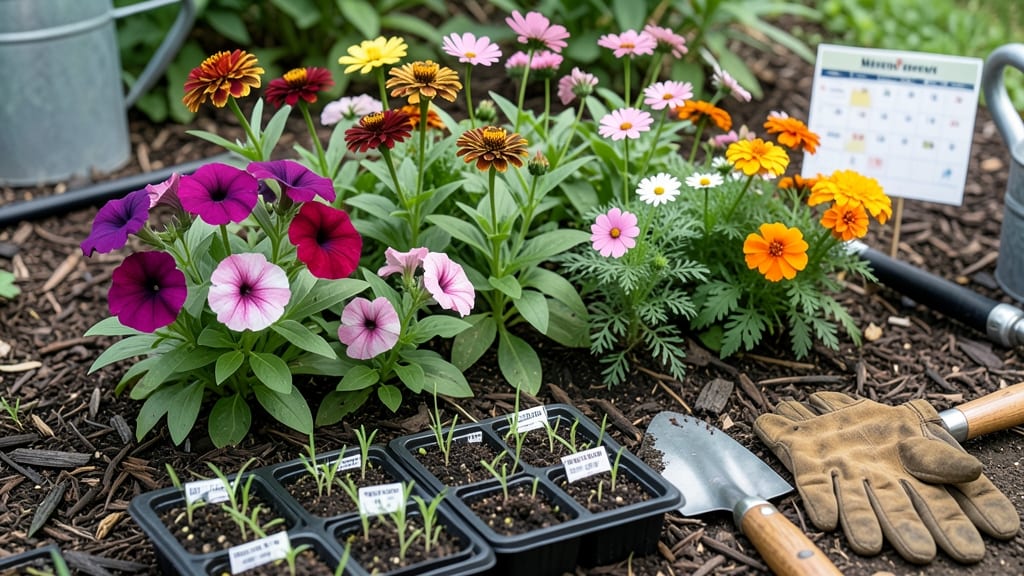
Planting your 🌸 flowers in Missouri at when is it safe to plant flowers in Missouri the wrong time can mean the difference between a vibrant garden and a sad pile of frost-nipped petals.
The last frost date isn't just a number—it's your garden's green light to grow, and getting it wrong could cost you weeks of blooms.
Most Missouri gardeners in zones 5b-6b wait until mid-April to early May, but that window shifts depending on whether you're in St. Louis, Kansas City, or rural areas.
Even a few degrees of warmth can trick you into planting too soon, only to have a late frost wipe out your progress.
Here's the good news: with the right timing, you can stretch your planting season into fall too. Annuals like marigolds and pansies love a late-August start, while perennials like coneflowers need that early May window to establish roots before summer heat hits.
Let me show you exactly how to read the signs—soil temperature, local forecasts, and even the behavior of your neighborhood trees—to plant with confidence. No more guessing, just blooms on schedule.
Missouri last frost dates by zone: exact timelines for safe flower planting
Missouri spans USDA hardiness zones 5a through 7a, meaning frost dates vary dramatically from northern St. Joseph (zone 5a) to southern Poplar Bluff (zone 7a). These differences can shift your planting window by 3-4 weeks, so knowing your exact zone is critical.
For example, Kansas City (zone 6a) typically sees its last frost around April 15, while St. Louis (zone 6b) averages April 22.
Why does this matter? Annual flowers like marigolds and zinnias need warm soil (60°F+) to germinate, while perennials like coneflowers can handle cooler temperatures. Planting too early risks frost damage or stunted growth, while waiting too long may reduce your blooming season.
Let’s break down the average last frost dates by zone, plus how to use this data for your garden.
🌱 Visual Tip: Bookmark your local National Weather Service page or use apps like Old Farmer’s Almanac to track real-time frost predictions. These tools often adjust dates by ±5 days based on current weather patterns.
Missouri Last Frost Dates by USDA Zone
| Zone | Northern Missouri (e.g., St. Joseph) | Central Missouri (e.g., Columbia) | Southern Missouri (e.g., Springfield) |
|---|---|---|---|
| Last Frost Date | April 5–15 | April 15–25 | April 25–May 5 |
| First Frost Date | October 15–25 | October 25–November 5 | November 5–15 |
| Frost-Free Days | 150–160 | 160–170 | 170–180 |
| Safe Planting Window | Mid-April to May 1 | Late April to early May | Early May to mid-May |
| Fall Planting Window | August 15–September 15 | August 20–September 20 | September 1–October 1 |
⚠️ Pro Tip: Use these dates as a starting point. Check your local Almanac or agricultural extension for updates—some years, frost can linger until May 10!
Missouri’s microclimates add another layer of complexity. For instance, urban areas like St. Louis often warm up faster than rural zones due to concrete heat absorption, while valleys (e.g., near the Ozarks) can stay frost-prone longer.
If you’re near a large body of water, like Lake of the Ozarks, expect cooler nights that delay planting by 5–7 days.
For annual flowers, aim to plant 2–3 weeks after your average last frost date.
This buffer accounts for late frosts and gives seedlings time to establish roots. Perennials, however, can often handle soil temperatures as low as 50°F, so you might plant them 1–2 weeks earlier if the ground isn’t frozen.
Always check the seed packet for specific recommendations—some varieties, like pansies, thrive in cooler temps!
Don’t forget about fall planting, which extends your blooming season into next year. In Missouri, late August to early September is ideal for cool-season flowers like chrysanthemums and asters.
These plants need time to establish roots before winter, so plan to plant them 6–8 weeks before your first frost. For example, if your first frost is October 25, aim to plant by September 10.
To test if it’s truly safe to plant, use the paper towel trick: Lay a damp paper towel on the soil at dusk. If it’s frost-free by dawn, you’re in the clear.
For extra protection, cover tender seedlings with frost cloth or row covers until temperatures stabilize. This is especially useful in zone 5a, where late frosts are more common.
Missouri’s unpredictable spring weather means even the most experienced gardeners double-check forecasts. The National Weather Service and Missouri Botanical Garden offer localized alerts—sign up for these to avoid costly mistakes.
For example, a hard freeze in early May 2020 caught many St. Louis gardeners off guard, damaging tender annuals like petunias.
Pro tip: Keep a gardening journal to track your local frost dates over the years. Over time, you’ll notice patterns—like whether your backyard stays frost-free 10 days earlier than the official average. This personal data can help you fine-tune your planting schedule for years to come.
🌸 Final Reminder: Always pair frost dates with soil temperature. A 60°F soil is ideal for most flowers, but some, like lupines, need 50°F. Use a soil thermometer ($10 at garden centers) to confirm readiness—this small investment can save your entire garden!
How to adjust planting dates for Missouri’s unpredictable spring weather
Missouri’s spring weather can be as unpredictable as a whirlwind—one day it’s 70°F and sunny, the next it’s 32°F with frost warnings.
To protect your tender flowers, I’ve learned to use a mix of soil temperature guides, local microclimates, and a simple 10-day rule for high-risk zones. These strategies have saved my pansies and petunias from more than one late frost!
First, check your soil temperature—not the air temperature. Most flowers need soil to warm to at least 60°F before planting. Use a soil thermometer (they’re cheap and lifesavers) or dig down 2-3 inches to feel the warmth.
If it’s cooler, cover your beds with black plastic mulch for a few days to speed up warming. This trick works especially well for heat-loving annuals like marigolds and zinnias.
🌱 5 Key Adjustments for Missouri’s Spring Planting
- Use soil temp (not air temp) to gauge readiness—60°F+ is ideal for most flowers.
- Add 2-4 weeks to planting dates in Zone 5a (north MO) vs. Zone 6b (south MO).
- Plant cold-hardy annuals (pansies, snapdragons) 2-3 weeks before last frost.
- Protect tender plants with frost cloth or row covers for first 2 weeks.
- Monitor forecasts and adjust if late frosts are predicted (common in April!).
Missouri’s microclimates can vary wildly even within cities. Urban areas like St. Louis often warm up faster than rural areas due to the "urban heat island" effect, while valleys and low-lying spots stay colder longer.
If you’re in a frost pocket (like many areas near the Ozarks), add an extra 10-14 days to your planting timeline. I once lost my entire geranium bed in one night because I underestimated my backyard’s frost risk!
For high-risk zones (think northern Missouri or elevated areas), I follow the 10-day rule: Wait until 10 days after the average last frost date for your zone before planting tender annuals.
This buffer accounts for those unpredictable late frosts that can sneak in even after the official date. Check the Missouri Climate Center or your local Cooperative Extension office for historical data—it’s a game-changer!
Don’t forget about fall planting, either! Missouri’s first frost typically hits around October 15, but you can plant cool-season flowers like calendulas and stock as early as late August.
Aim to get them in the ground 6-8 weeks before frost so they have time to establish roots. I’ve had pansies bloom all winter in my garden—it’s magical!
Finally, keep a planting checklist handy.
Mine includes: ☑️ Soil temp checked (60°F+) ☑️ Frost-free forecast for 10 days ☑️ Frost cloth on hand for emergencies ☑️ Watering schedule planned (deep watering after planting) This simple routine has cut my plant losses by 90%—and my garden looks like a postcard every summer!