
Trees
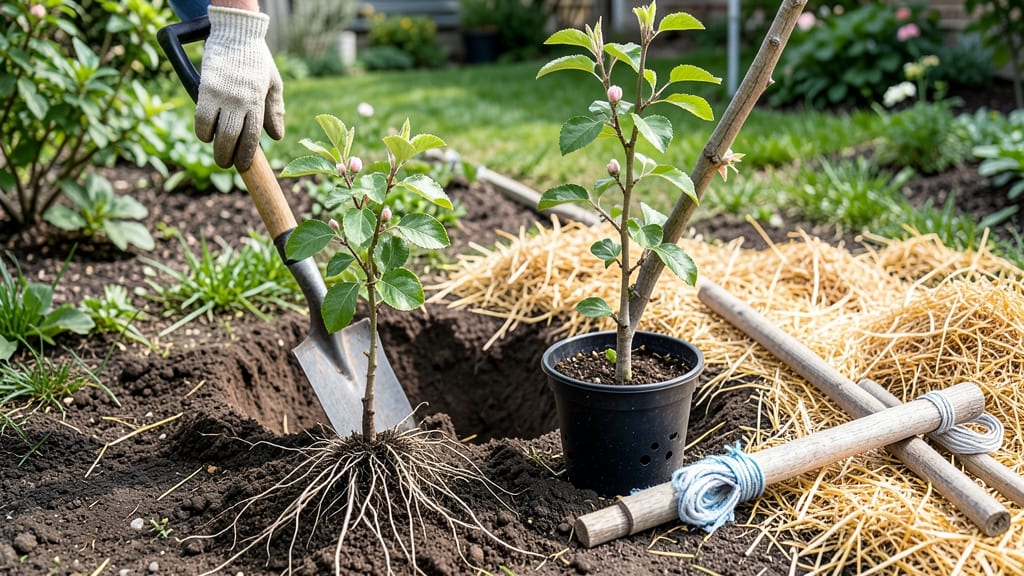
Planting an apple tree 🍎 in Iowa isn’t just about sticking a sapling in the ground—it’s about timing that keeps your young tree alive through brutal winters and thriving when spring arrives.
With USDA Zones 5a-5b and frost dates that can swing wildly, getting the timing wrong means weak roots or frost damage. But here’s the good news: when you plant at the right moment, your tree will establish strong roots before winter hits.
I’ll walk you through the two best windows—early spring and early fall—plus how to prep your soil and choose the right sapling for Iowa’s climate. Let’s get your orchard off to the best start possible.
Whether you’re a first-time gardener or a seasoned grower, these tips will help you avoid common mistakes and give your apple tree 🍎 the fighting chance it needs to grow big and healthy.
Optimal planting windows for Iowa’s USDA zones 4-5 (with frost date guide)
Iowa’s USDA Zones 4-5 create unique challenges for apple tree planting, where frost dates and soil temperatures dictate success. Planting too early risks frost damage, while waiting too long weakens root establishment before winter.
My experience shows early spring (March-April) and early fall (September-October) offer the best windows for strong growth.
For bare-root apple trees, aim to plant when soil temperatures reach 40°F (4°C)—typically by late March in southern Iowa or early April in northern regions. Container-grown trees have more flexibility but still need 6-8 weeks before the first hard frost to establish roots.
Iowa’s last frost dates vary dramatically: April 15 in Des Moines but as late as May 1 in northern zones. Urban areas often frost 2-3 days earlier than rural zones due to heat island effects. Always check your local Iowa State University Extension frost maps before planting.
Here’s how Iowa’s microclimates affect planting timing:
| Planting Window | Ideal Month | Soil Temp Requirement | Key Consideration |
|---|---|---|---|
| Early Spring | March-April | 40-50°F (4-10°C) | Plant before buds swell; avoid frost pockets |
| Early Fall | September-October | 50-60°F (10-15°C) | Complete root growth 6 weeks before frost |
| Urban Zones | April-May | 45°F (7°C) minimum | Wait 2 weeks after rural frost dates |
| Northern Iowa | Late April | 45°F (7°C) minimum | Use frost blankets for early spring planting |
I’ve found that dwarf apple varieties like ‘Honeycrisp’ or ‘Zestar!’ series establish faster in Iowa’s climate, making them ideal for early spring planting (March). These varieties also tolerate late frost events better than standard-sized trees.
For fall planting, prioritize September 1-15 in southern Iowa and October 1-15 in northern zones. This gives roots time to harden before winter while avoiding late-season fungal risks from prolonged moisture. Always choose disease-resistant rootstocks like M.9 or B.9 for Iowa’s humid summers.
My biggest mistake? Planting in mid-May—the trees struggled to establish before winter. Now I verify frost dates using the Midwestern Regional Climate Center and adjust my schedule accordingly. Container-grown trees give me a 4-6 week buffer compared to bare-root saplings.
Pro tip: If planting in urban Iowa, test your microclimate by observing when neighborhood fruit trees bloom. Early bloomers signal it’s safe to plant bare-root trees.
How to prepare apple tree saplings for Iowa’s extreme weather before planting
Iowa’s clay-heavy soil and freezing winters can stress young apple trees—so preparation is everything. Start by selecting disease-resistant varieties like 'Honeycrisp' or 'Zestar!', which handle Iowa’s USDA Zone 4-5 conditions better than standard types. These varieties thrive even when temperatures dip below -20°F.
Before planting, inspect your sapling’s root system. Trim any damaged roots with clean pruners, but avoid cutting more than 1/3 of the roots—this ensures the tree can establish quickly. For bare-root trees, soak roots in water for 1-2 hours before planting to rehydrate them.
Iowa’s compacted clay soil drains poorly, so amend it with organic matter like compost or well-rotted manure. Mix in sand or peat moss to improve drainage, especially if your yard floods in spring. Aim for a 6-inch-deep amended layer where the tree’s roots will grow.
If you’re planting in early fall (September-October), protect young trees with frost blankets or burlap wraps once nighttime temps drop below 32°F. For spring plantings, apply a 2-inch layer of mulch around the base (but keep it 6 inches away from the trunk) to insulate roots.
Avoid synthetic mulches—they trap too much moisture.
Test your soil’s pH level (ideal range: 6.0-6.5 for apples). Iowa’s native soil often tests alkaline, so add sulfur or peat moss to lower pH if needed. A simple home pH test kit costs under $10 and saves hours of guesswork.
Finally, prune any broken branches before planting to reduce stress. Focus on removing crossing limbs or deadwood, but leave the tree’s central leader intact. This encourages upward growth, which is crucial for Iowa’s short growing season.
With these steps, your apple tree will enter Iowa’s harsh winters with a fighting chance—ready to burst into growth as soon as spring arrives. 🌱🍏