
Plants
Planting grass seed in Minnesota too late can mean the difference between a lush lawn and a winter of bare patches—but figuring out that exact cutoff date is trickier than you’d think.
With USDA zones 3-5 and unpredictable frost patterns, most gardeners assume mid-fall is the last chance for success. However, the real deadline depends on soil temperatures, seed variety, and regional frost risks you might not have considered.
I’ll break down the science behind Minnesota’s last-minute planting window so you can avoid costly mistakes.
You’ll discover how to read your local climate cues—like soil thermometers and frost-free day forecasts—to extend your planting season safely. Plus, I’ll share which fast-germinating grass types give you the best shot at root establishment before winter sets in.
Whether you’re in the Twin Cities or the Iron Range, knowing these critical timing factors could save you from replanting next spring. Let’s get your lawn growing strong—even when the calendar says it’s too late.
Minnesota’s ideal grass seed planting window: last chance dates by region
Minnesota’s cool-season climate means grass seed thrives when soil temperatures hover between 50°F and 65°F—perfect for spring planting but tricky for late-season attempts. The last safe window depends on your region, with northern MN cutting it closer than southern areas.
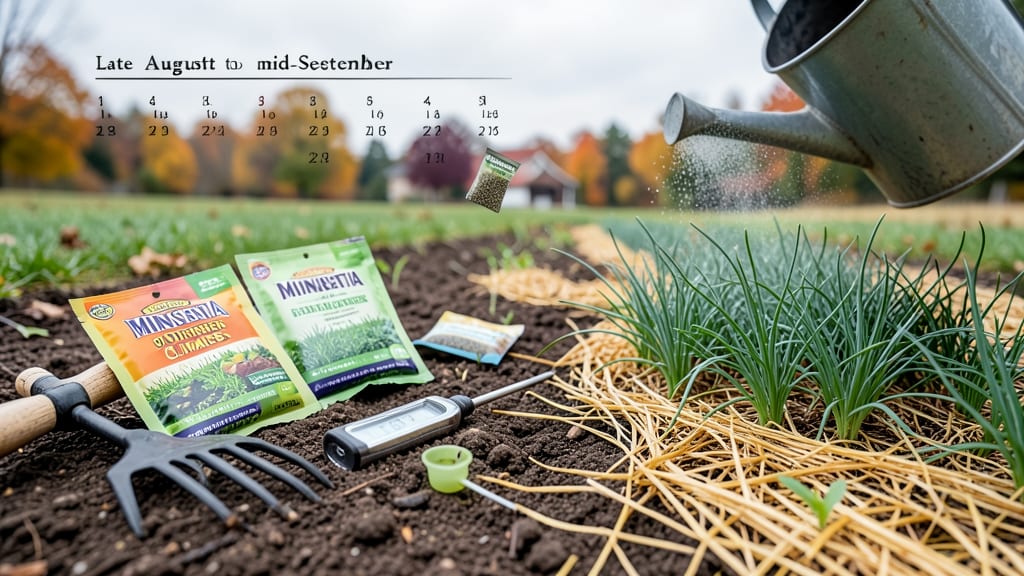
For most of the state, late August to early September is your final opportunity, but timing varies by USDA zones 3-5.
Southern Minnesota (zones 4-5) can push planting until mid-September if soil stays above 50°F, while northern areas (zone 3) should stop by early September to avoid frost damage. The key metric? 6-8 weeks before first frost—any later, and seedlings won’t establish roots deep enough to survive winter’s chill.
🌱 Pro Tip: Check the University of Minnesota Extension’s frost date maps (updated annually) for your exact county’s cutoff. For example, Duluth’s last frost often hits by October 10, leaving just 6 weeks for late-season planting, while Rochester’s extends to October 20.
| Region | Last Chance Planting Window | Soil Temp Threshold | Frost Risk |
|---|---|---|---|
| Northern MN (Zone 3) | Early August – Early September | 50°F–60°F | High (frost by Oct 1) |
| Central MN (Zone 4) | Late August – Mid-September | 50°F–65°F | Moderate (frost by Oct 15) |
| Southern MN (Zone 5) | Mid-August – Late September | 55°F–70°F | Low (frost by Oct 20) |
Soil temperature is more critical than air temperature. Use a soil thermometer ($10 at garden centers) to verify conditions—below 50°F stalls germination, while above 70°F can cause seed dormancy.
In northern MN, aim for late August when days cool slightly; southern areas can wait until early September.
🌡️ Warning: Planting after September 15 in zone 3 or October 1 in zone 5 risks seedlings freezing before roots develop. Even if grass sprouts, shallow roots won’t survive winter’s heaving soil—leading to brown patches next spring.
For maximum success, pair late-season planting with cold-hardy varieties like tall fescue or fine fescue mixes, which tolerate 32°F once established. Pair this with mulching (straw or compost) to insulate seeds and retain 50% more moisture during chilly nights.
💧 Watering Hack: Use a rain gauge to track 1 inch of water weekly—critical for late-season germination. Morning watering (before 10 AM) prevents fungal diseases like pythium, which thrive in damp evening soil.
If you’re borderline on timing, consider hydrated seed (soaked in water for 24 hours) to jumpstart germination. This buys you 3-5 extra days in marginal conditions, but only works for cool-season grasses like Kentucky bluegrass.
📅 Final Deadline: September 10 (northern MN) and October 1 (southern MN) are your absolute cutoffs. After these dates, switch to spring planting plans—your lawn will thank you next summer.
Signs your late-season grass seed planting will fail (and how to Fix it)
Planting grass seed late in Minnesota’s season is risky—especially when soil temperatures drop below 50°F or frost threatens within 4 weeks. If you’ve already sown seed near the deadline, watch for these red flags that signal trouble ahead.
First, check for slow or no germination after 2 weeks. Cool-season grasses like Kentucky bluegrass or tall fescue may sprout in 50-60°F soil, but if your yard stays below 45°F, seeds can rot instead of grow.
A quick soil thermometer test at 4 inches deep (where roots form) will confirm.
🚨 CALLOUT WARNING 🚨
- Problem: Fungal growth from wet soil → Yellow patches
- Fix: Improve drainage with sand/compost mix and reduce watering
- Problem: Frost damage to seedlings → Brown, crispy blades
- Fix: Cover with straw mulch (1/4 inch) for insulation
- Problem: Birds eating seed → Bare spots
- Fix: Use bird netting or pre-emergent spray (after planting)
🌱 Pro Tip: If soil stays below 45°F, delay planting until spring—your lawn will thank you!
Another warning sign? Thin, weak grass blades that fail to thicken after 4-6 weeks. This often means poor seed-to-soil contact or insufficient sunlight (Minnesota’s shorter days in late fall can slow growth).
Rake the area gently to break up crust and ensure seeds aren’t buried too deep (1/4 inch max).
If your lawn shows patchy establishment with bare spots, it could be due to uneven seed distribution or compaction. Aerate the soil with a manual core aerator (rent or borrow one) to loosen 2-3 inches deep.
Then, overseed lightly and water deeply to encourage roots to penetrate compacted layers.
Don’t ignore weed competition, either. Late-season crabgrass or clover can outcompete young grass seedlings. Apply a pre-emergent herbicide (like pendimethalin) 2 weeks after planting to block weeds without harming grass. For organic options, use corn gluten meal as a natural pre-emergent.
Finally, if your grass stops growing entirely before winter, it’s likely dormant due to cold. This isn’t a failure—it’s normal! But if you see black, mushy roots when digging up a small section, your seeds rotted from overwatering or excessive rain.
Adjust your watering to early morning only and let the soil dry slightly between waterings.
With these fixes, even a late-season planting can still yield a lush Minnesota lawn—if you act fast when you spot the warning signs. 🌱