
Plants
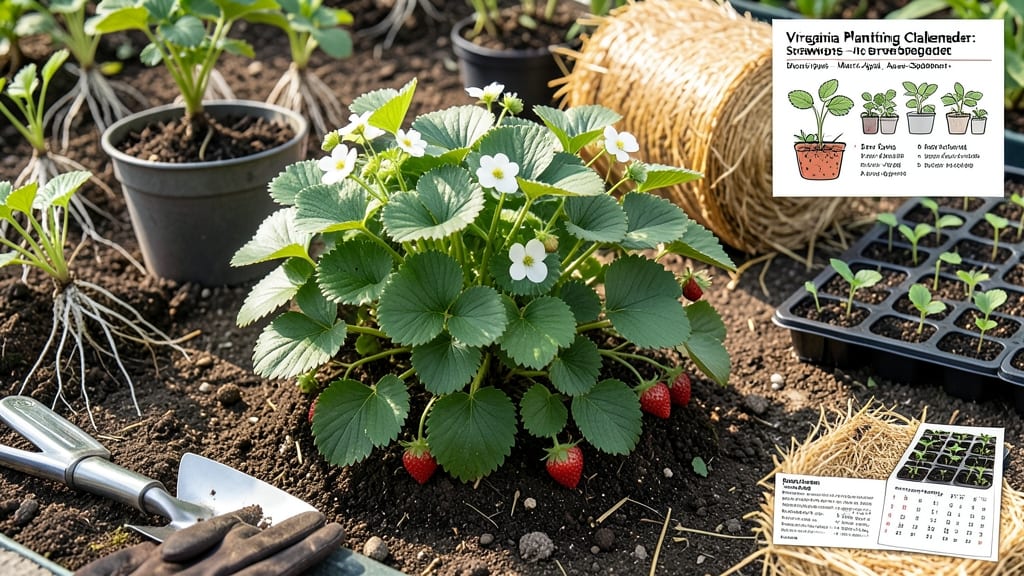
Planting strawberries at the wrong time in Virginia can mean the difference between a juicy, bountiful harvest and wilted disappointment—especially when frost dates vary wildly across zones 6a-8a.
The key to success isn’t just choosing the right month but understanding your local microclimate, whether you’re in the Piedmont’s rolling hills or the Tidewater’s coastal warmth.
For most Virginia gardeners, the ideal window falls between late winter and early spring (February–April) or fall (September–October), but timing shifts dramatically depending on your region.
A late frost in the Blue Ridge could ruin a spring planting, while coastal areas might escape frost entirely—so knowing your last expected frost date is critical. This guide breaks down the exact months to plant for zero-frost success, plus soil prep tips tailored to Virginia’s unique growing conditions.
You’ll also discover which strawberry varieties thrive in your zone—whether it’s the frost-hardy June-bearers for the mountains or the heat-tolerant everbearers for the Tidewater. With the right timing and prep, you can enjoy sweet, homegrown 🍓 from May through October, no matter where you are in the state.
Ready to skip the guesswork? Let’s dive into the planting schedule, soil secrets, and variety recommendations that will set you up for a harvest to be proud of.
Virginia strawberry planting calendar by region: exact months to avoid frost damage
Virginia’s diverse climate—from the milder Coastal Plain to the cooler Blue Ridge Mountains—means your strawberry planting window can vary by 6 weeks or more. Planting too early risks frost damage, while waiting too long cuts your harvest short.
The key is aligning your timeline with your USDA zone and last frost dates, which shift dramatically from Tidewater to the Appalachians.
For example, gardeners in Zone 7b Norfolk can safely plant as early as February 15, while those in Zone 6a Roanoke should wait until March 20 to avoid late frosts. Below, we’ve mapped out the optimal planting windows for Virginia’s 5 regions, including soil temperature triggers and frost-risk callouts.
| Region | USDA Zone | First Frost Avg | Last Frost Avg | Planting Window | Soil Temp | Best Varieties |
|---|---|---|---|---|---|---|
| Coastal Plain (Tidewater) | 7b–8a | October 15–November 1 | March 1–15 | Feb 15–March 15 (spring) or Sept 1–15 (fall) | 55–60°F | Chandler, Camarosa |
| Piedmont (Richmond, Lynchburg) | 6b–7a | October 20–November 5 | March 10–25 | March 1–15 (spring) or Sept 15–Oct 1 (fall) | 50–55°F | Allstar, Seascape |
| Blue Ridge (Roanoke, Blacksburg) | 6a–6b | October 25–Nov 10 | March 20–April 5 | March 20–April 1 (spring) or Sept 30–Oct 10 (fall) | 45–50°F | Jewel, Albion |
| Valley & Ridge (Staunton, Harrisonburg) | 6a–6b | October 20–Nov 5 | March 15–25 | March 25–April 5 (spring) or Sept 25–Oct 5 (fall) | 45–50°F | Ozark Beauty, Fort Laramie |
| Appalachian Plateau (Bristol, Abingdon) | 6a–6b | October 30–Nov 15 | March 25–April 10 | April 1–10 (spring) or Sept 20–Oct 1 (fall) | 45–50°F | Honeoye, Sparkle |
⚠️ Pro Tip: Use a soil thermometer to confirm soil temps—strawberries need 50–60°
Virginia’s clay-heavy soils and acidic bedrock can turn your strawberry patch into a soggy nightmare if you don’t prep properly. Without the right soil, even the best strawberry varieties will struggle with root rot or poor nutrient uptake. The key? Three non-negotiable steps to create the perfect growing environment—whether you’re in the humid Piedmont or the cooler Blue Ridge Mountains. First, test your soil’s pH—Virginia’s natural acidity often skews too low for strawberries. Aim for a pH of 5.5–6.5 by mixing in lime (for acidic soils) or sulfur (for alkaline soils). Use a soil test kit from Virginia Cooperative Extension to get precise readings before planting. This small step prevents nutrient lockout, ensuring your plants absorb calcium and magnesium for strong roots and sweet berries. Next, boost organic matter to a depth of 3–4 inches. Virginia’s soils often lack the humus strawberries crave, so mix in well-aged compost or pine bark fines—a local favorite for its acidity-loving properties. Work this into the top 12 inches of soil to improve aeration and water retention. Pro tip: If you’re gardening in containers (common in urban VA areas), use a 50/50 mix of potting soil and compost to mimic ideal conditions. Finally, fix drainage issues—Virginia’s clay soils can suffocate roots. If your garden holds water after rain, amend with coarse sand or create raised beds filled with a lightweight soil mix. Strawberries hate soggy feet, and poor drainage is the #1 reason Virginia gardeners lose their plants. For heavy clay, consider container gardening with drainage holes to keep roots happy. Don’t skip mulching! After planting, cover the soil with 2–3 inches of straw mulch to retain moisture, suppress weeds, and regulate soil temperature. This is especially critical in Virginia’s hot summers and cold winters. Mulch also prevents soil-borne diseases, like gray mold, from splashing onto your berries. With these three steps, your Virginia soil will be primed for juicy, disease-resistant strawberries—no more wilted dreams! 🌱How to prepare Virginia soil for strawberries: 3 critical steps before planting
Use lime for acidic soils or sulfur for alkaline. Test with a kit from Virginia Cooperative Extension.
Mix compost or pine bark fines (ideal for VA’s acidic soils) into the top 12 inches of soil.
For clay soils, amend with coarse sand or plant in raised beds filled with a 50/50 mix of soil and compost.