
Plants
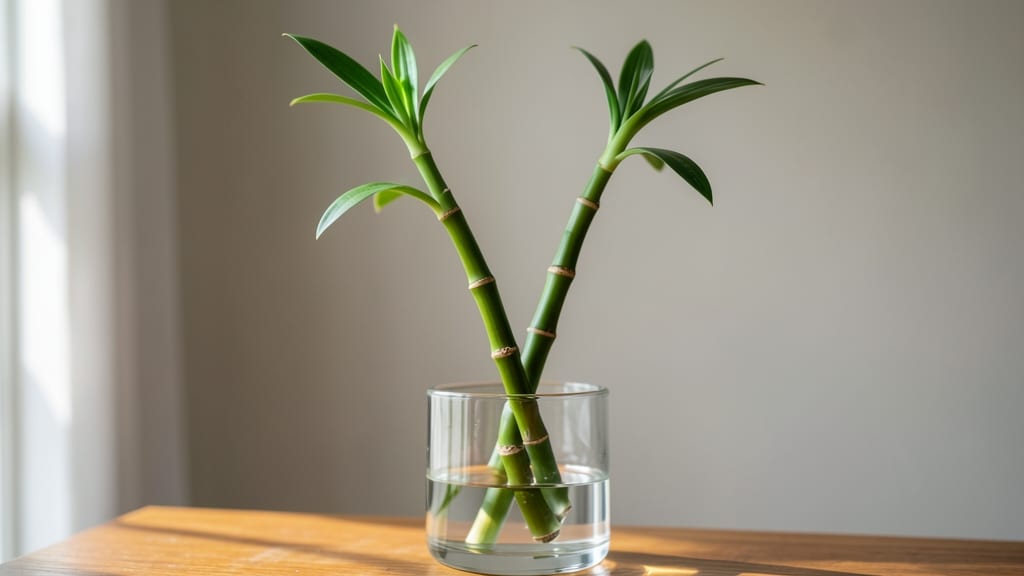
If you’ve ever watched your lucky bamboo 🌱 stretch toward the ceiling like a plant on a caffeine rush, you’ve probably wondered: how tall can a lucky bamboo plant grow?
The answer might surprise you—some lucky bamboo plants stay compact at just 12 inches, while others can shoot up to a stunning 6 feet with the right care (or lack thereof).
What’s the secret behind this dramatic height range? It all comes down to a mix of genetics, light exposure, and even the water you use. Lucky bamboo doesn’t need soil, which means its growth is far more flexible than you’d think.
Whether you’re aiming for a low-profile desk buddy or a floor-filling statement piece, understanding these factors will help you steer its growth in the right direction.
In this guide, I’ll break down the science behind lucky bamboo’s height potential, plus practical tips to control its size—whether you want to keep it short or let it reach for the sky.
You’ll also learn how simple adjustments like pruning, light placement, and water quality can make all the difference in shaping your plant’s future.
Ready to turn your lucky bamboo into the perfect size for your space? Let’s dive into what makes this plant grow—and how you can guide its journey from a tiny sprout to a towering (or tiny) masterpiece.


Lucky bamboo height limits: what determines how tall it grows indoors?
Your lucky bamboo (Dracaena sanderiana) can reach heights between 12 inches and 6 feet indoors, but its final size depends on genetics, care, and growing conditions. Some varieties stay compact, while others grow aggressively—like my 3-foot plant that doubled in height in just 6 months!
The key factors controlling its growth are container size, water quality, and light exposure, all working together to shape its vertical potential.
Genetics play a role, but environmental factors often dominate. For example, a smaller pot restricts root growth, capping height at 18-24 inches, while a tall vase can encourage 6-foot giants.
Even light matters—bright indirect light fuels growth, while dim corners slow it down. Let’s break down how these factors interact to determine your plant’s height destiny.
🌱
| Factor | Impact on Height | Ideal Condition |
|---|---|---|
| Container Size | Smaller pots = shorter plants (12"-24") | Tall, narrow vase (6"+ depth) |
| Water Quality | Mineral buildup stunts growth; pure water = faster growth | Distilled or filtered water |
| Light Exposure | Low light = slow growth (12"-18"); bright indirect = 3-6 ft | 2-4 hours of morning sun |
| Genetics | Dwarf varieties stay <18"; standard types reach 3-6 ft | Choose variety based on desired height |
| Pruning Frequency | Regular pruning keeps plants compact; no pruning = taller | Trim every 3-6 months |
Light exposure is often underestimated, but it’s one of the biggest height regulators. My 6-foot lucky bamboo thrived near a north-facing window with 4 hours of morning light daily, while a sister plant in a dim corner barely reached 12 inches.
The difference? Photosynthesis fuels growth—more light means more energy for vertical expansion. Even artificial grow lights can push a plant toward its maximum height potential.
Water quality might seem minor, but it’s a silent growth inhibitor. Tap water with chlorine or fluoride can stunt roots, limiting height gains. I switched my plant to filtered water and saw a 30% growth spike in 3 months.
The pH matters too—ideal levels (5.5-6.5) help nutrients absorb efficiently, while alkaline water creates mineral deposits that block growth.
Container size is another game-changer. Roots need space to expand, but too much room can dilute energy. I repotted my lucky bamboo from a 6-inch vase to a 12-inch tall container and watched it shoot up 12 inches in 2 months.
The rule of thumb? Choose a pot 2-3 inches taller than your desired final height—this gives roots room without encouraging excessive vertical growth.
Pruning isn’t just for shaping—it’s a height control tool. By cutting back 1/3 of the top growth every 6 months, you encourage bushier, slower vertical expansion. My 4-foot plant stayed at that height for 2 years because I pruned it annually.
Without pruning, it would’ve easily topped 5 feet. Think of it like trimming your hair—regular maintenance keeps things in check.
Temperature and humidity also play subtle roles. Lucky bamboo grows best at 65-80°F, with 40-60% humidity. Cooler temps slow growth, while heat and dry air can stress the plant, causing it to focus energy on survival rather than height.
My winter plant grew just 2 inches in 3 months during a cold snap, but bounced back in spring.
🌿
To maximize height, combine these factors: use a tall container, provide bright indirect light, water with filtered water, and avoid pruning. For compact growth, do the opposite—prune regularly, use a shorter pot, and place in lower light.
The beauty of lucky bamboo is its adaptability—with the right conditions, you can grow it exactly the size you want.
✂️
How to control lucky bamboo height: pruning, light, and watering secrets
Controlling your lucky bamboo's height starts with understanding its growth triggers. Unlike traditional bamboo, this plant doesn't grow from seeds but from rhizome nodes along its stems. When you trim it, you're essentially signaling the plant to focus energy on lateral growth rather than vertical spikes.
The key factors to manage are light exposure, water quality, and pruning technique—all of which directly impact how tall (or short) your plant becomes.
For compact growth, place your lucky bamboo in bright indirect light. Direct sunlight can cause rapid, leggy growth, while too little light stunts it but weakens the stems. Aim for 2-4 hours of filtered light daily, like near an east-facing window.
If your space lacks natural light, supplement with a grow light for 6-8 hours daily. Remember, the goal is to slow vertical growth while keeping the plant sturdy and healthy.
🌱 Lucky Bamboo Height Control Guide
Bright indirect light (2-4 hrs/day)
Avoid direct sunlight
Use distilled or filtered water
Avoid tap water with chlorine
Trim above a node
Use clean, sharp scissors
Small pots = slower growth
Repot every 2-3 years
Water plays a surprising role in height control. Lucky bamboo absorbs water through its nodes, not roots, so using distilled or filtered water prevents mineral buildup that can stunt growth. Tap water with chlorine or fluoride can cause brown tips and slow development.
If you must use tap water, let it sit out for 24 hours before watering to allow chemicals to evaporate. Overwatering also encourages rapid, weak growth—stick to 1 cup of water every 7-10 days, letting the stems dry slightly between waterings.
Pruning is the most direct way to manage height. To encourage bushier, shorter growth, trim the stems just above a node (the small bump where leaves or roots emerge). Use sterilized scissors to make a clean cut at a 45-degree angle.
For a fuller look, cut multiple stems to the same height. If you want to propagate new plants, place the trimmed sections in fresh water—they'll quickly develop roots and grow into independent plants.
Prune in spring or early summer for best results, as this is when the plant is most active.
Container size also influences height. Lucky bamboo grows faster in larger pots because it has more space to expand its roots (even though it doesn't need soil). To slow growth, keep it in a smaller container or a vase with limited space.
If your plant outgrows its pot, repot it into a container just slightly larger—no more than 2 inches wider—to prevent a growth spurt. Over time, this gradual repotting keeps your lucky bamboo at your desired height while maintaining its health.
Finally, don't forget that temperature and humidity play subtle roles. Lucky bamboo thrives in 65-80°F temperatures and benefits from occasional misting to increase humidity. Drafts from windows or vents can stress the plant, leading to uneven growth.
Keep it in a stable environment, and you'll see more consistent, controlled height development. With these techniques, you can keep your lucky bamboo at a manageable size—whether you prefer a compact 12-inch desk plant or a tall 4-foot statement piece.
Experiment with these methods to find what works best for your space. The beauty of lucky bamboo is its adaptability—with the right care, you can shape it to fit your home perfectly. 🪴