
Plants
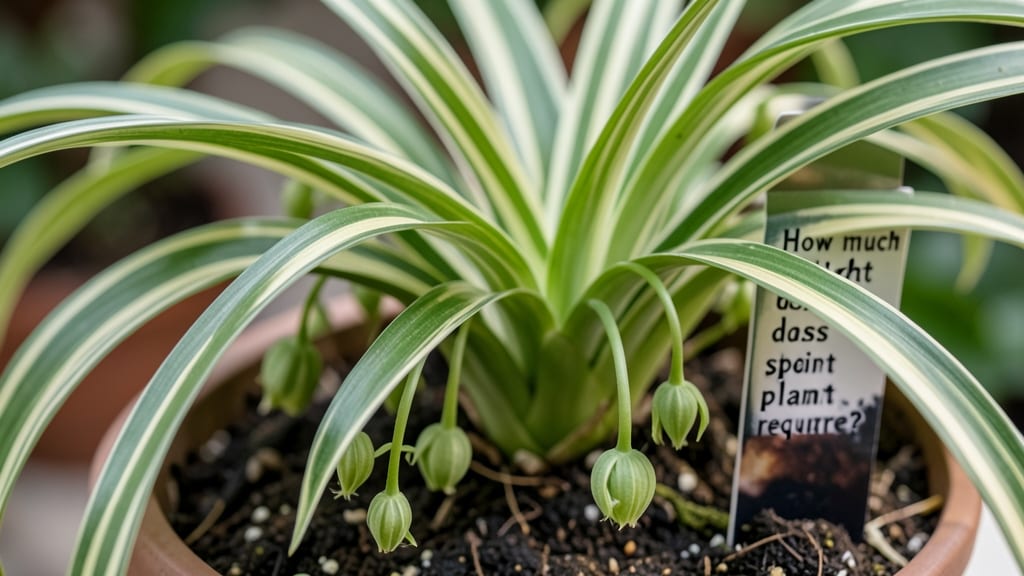
If your 🌿 spider plant looks sad with droopy leaves or brown tips, you might be getting how much light does a spider plant require wrong.
These hardy plants thrive in surprisingly flexible conditions, but knowing exactly how much light they need is the key to keeping them lush and happy.
Most people assume spider plants need bright light, but the truth is they’re surprisingly adaptable. From dim corners to sunny spots, they can handle a range of brightness—though there’s a sweet spot for optimal growth. Let’s break down how to spot the perfect light conditions for your plant’s health.
Whether you’re dealing with a north-facing window or an office under fluorescent lights, understanding their light needs will save you from overwatering or sunburned leaves. I’ll show you exactly how to tell if your spider plant is getting just the right amount of light—and what to do if it’s not.
Ready to give your plant the ideal environment? You’ll learn how to adjust care based on your home’s lighting, so your spider plant stays vibrant year-round. Let’s get started!
 Best Window Placement
Spider plant light requirements: the ideal spectrum from low to bright indirect sun
Spider plants (Chlorophytum comosum) are famously adaptable, but their light needs are often misunderstood. Unlike sun-loving succulents, they thrive in low to bright indirect light, making them perfect for homes with limited natural sunlight.
The key is finding that sweet spot where their variegated leaves stay vibrant and growth remains steady.
Most spider plants tolerate 4-6 hours of indirect light daily, but this varies by variety. Solid-green types handle lower light better than variegated ones, which need slightly more brightness to maintain their striking patterns.
Think of it like a spectrum—too little light causes leggy growth, while too much leads to brown tips.
Here’s how to break down their light needs:
| Light Level | Ideal Conditions | Best For |
|---|---|---|
| Low Light (10-25% brightness) | North-facing windows, offices, or rooms without windows | Solid-green varieties, slow growth |
| Medium Light (25-50% brightness) | East or west-facing windows, 2-3 feet from a window | Variegated varieties, balanced growth |
| Bright Indirect (50-75% brightness) | South-facing windows with sheer curtains, 3-5 feet away | All varieties, fastest growth |
💡 Pro Tip: Rotate your plant weekly to ensure even light exposure.
For variegated spider plants, bright indirect light is non-negotiable. These beauties rely on sunlight to maintain their creamy-white stripes, which fade in low light. If you notice the stripes turning green, it’s a sign your plant is craving more brightness.
Even so, avoid placing them in direct sunlight, as harsh rays can scorch their delicate leaves.
Seasonal adjustments are key. In winter months, when natural light dims, supplement with a grow light if you notice slow growth. Conversely, during summer, move your plant away from south-facing windows to prevent leaf burn.
A simple trick is to use a sheer curtain to diffuse harsh light while still allowing plenty of brightness.
If you’re unsure about your home’s light levels, perform a DIY light test. Place your spider plant in a potential spot for a week. If the leaves stay upright and vibrant, you’ve found the perfect location.
If they stretch toward the light or develop yellow patches, it’s time to adjust.
Remember, spider plants are forgiving but not indestructible. The goal is to mimic their natural habitat—dappled shade under trees. With the right light, your plant will reward you with lush foliage and those adorable spiderettes (baby plants) that make propagation a breeze.
For office environments with fluorescent lighting, spider plants still thrive, but consider adding a full-spectrum LED bulb to replicate natural light. Even a simple south-facing bookshelf can work if it’s 3-4 feet from the window.
Lastly, monitor your plant’s response to light. Healthy spider plants have arching leaves and tight growth patterns. If yours looks stretched or weak, it’s time to tweak its lighting setup. With these guidelines, your spider plant will flourish—no guesswork required!
Spider plant light requirements: the ideal spectrum from low to bright indirect sun
Spider plants (Chlorophytum comosum) are one of the most forgiving houseplants, but their light needs still deserve attention. Unlike sun-worshiping plants, spider plants thrive in low to bright indirect light, making them perfect for offices, bathrooms, or north-facing windows.
The key is avoiding harsh, direct sunlight, which can scorch their delicate leaves. Even variegated varieties (with white stripes) need slightly more light to maintain their striking patterns.
Think of your spider plant’s light tolerance like a flexible spectrum: too little causes slow growth and pale leaves, while too much triggers brown tips. The sweet spot is 4-6 hours of bright indirect light daily, similar to the dappled shade under a tree.
This range keeps their foliage lush and encourages those iconic spiderettes (baby plants) to form.
🌱 Spider Plant Light Requirements Summary
| Light Type | Ideal Conditions | Notes |
|---|---|---|
| Low Light | North-facing windows, 2-3 feet from glass | Survives but grows slowly; leaves may stretch |
| Medium Light | East/west windows, 3-5 feet from glass | Ideal for most homes; healthy growth and variegation |
| Bright Indirect | South window with sheer curtain, 4-6 feet away | Best for variegated types; avoid direct sun |
| ⚠️ WARNING: Direct sunlight causes leaf burn | ||
If you’re unsure about your space’s light levels, perform a simple DIY light test: hold a piece of white paper near your plant for a few hours. If the paper shows no visible shadows, you likely have low light.
For medium light, shadows will be soft but defined. Bright indirect light creates sharp but diffused shadows—this is your spider plant’s happy zone.
For variegated spider plants, prioritize the brighter end of the spectrum (medium to bright indirect). These varieties need extra light to maintain their white stripes, which are less efficient at photosynthesis.
Solid green varieties are more adaptable and handle lower light better. Rotate your plant quarter-turns every 2-3 weeks to ensure even growth, especially in unevenly lit rooms.
Seasonal changes also affect light needs. In winter, when natural light dims, supplement with a 12-hour grow light if your plant looks leggy. Conversely, in summer, move it away from south-facing windows to prevent leaf scorch. A sheer curtain can diffuse harsh rays while still allowing beneficial light through.
Remember, spider plants are adaptable survivors—they’ll grow almost anywhere, but they’ll reward you with vibrant foliage and prolific spiderettes when given their preferred bright indirect light.
Start with a medium-light spot, observe your plant’s response, and adjust gradually. With the right light, your spider plant will become the hardy, low-maintenance star of your home.