
Trees
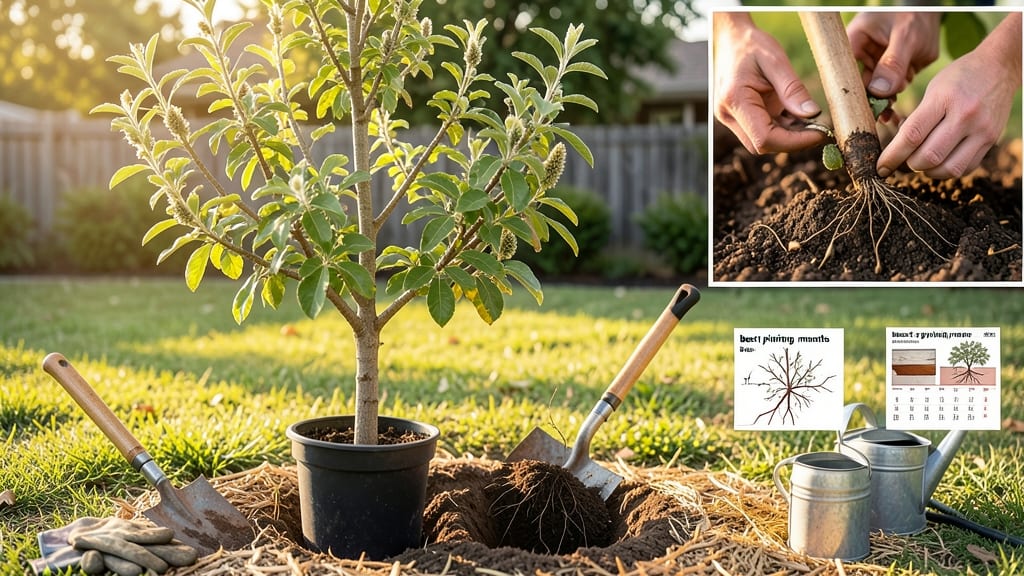
Planting your 🍎 fruit trees at the wrong time in North Texas could mean waiting years for that first peach or apple—because the region’s chill hours are as fickle as its weather.
Unlike other areas, where timing is straightforward, Texas demands you pay attention to both the calendar and your tree’s cold requirements.
Most gardeners in USDA Zone 8a assume late winter is the only window, but container-grown trees actually give you flexibility year-round—if you know the tricks. The key isn’t just avoiding frost (though that’s critical); it’s matching your tree’s chill-hour needs to your microclimate, whether you’re in Dallas or Lubbock.
I’ve planted dozens of fruit trees here, and the difference between a thriving orchard and a sad, struggling sapling often comes down to one simple rule: plant when the soil is workable but before buds swell.
That’s your sweet spot for success—whether you’re dropping in bare-root trees in February or container-grown varieties in early spring.
Ready to skip the guesswork? I’ll walk you through the exact windows, soil prep secrets, and even how to protect young trees from North Texas’s infamous late frosts. Let’s get those roots in the ground the right way.
North Texas chill-hour zones: matching fruit trees to your local climate
North Texas spans USDA Zones 7-9, but chill hours—not just zones—determine which fruit trees thrive. Peaches and plums need 400-600 chill hours, while apples and pears require 800-1,200 hours.
Dallas-Fort Worth typically gets 500-700 chill hours, while West Texas drops to 300-500 hours, making some varieties risky.
Use the Texas A&M Chill-Hour Calculator to check your exact location. For example, Elberta peaches (500 hours) will bloom reliably in Zone 7b, but Fuji apples (1,000 hours) may fail in Zone 8a unless you use low-chill varieties like Anna apples (300 hours).
Here’s how to decode your local chill hours: Most North Texas areas fall into 3 zones—400-600 hours (West Texas), 600-800 hours (DFW), and 800+ hours (northeast Texas). Match your tree’s needs to your zone to avoid poor blooming or no fruit.
Pro Tip: If you’re in Zone 8a, prioritize low-chill varieties like Sanguine peaches (300 hours) or Santa Rosa plums (400 hours). High-chill trees (like Granny Smith apples) will struggle unless you live in the northeast corner of the state.
| Fruit Tree | Chill Hours Needed | Best North Texas Zones | Notes |
|---|---|---|---|
| Peach (Elberta) | 500-600 | 7b-8a | Classic choice for DFW; needs well-draining soil. |
| Plum (Santa Rosa) | 400-500 | 7a-8b | Drought-tolerant; great for West Texas. |
| Apple (Anna) | 300-400 | 8a-9 | Low-chill; thrives in southern North Texas. |
| Fig (Celeste) | 200-300 | 8b-9 | Heat-loving; minimal chill requirements. |
| Pear (Seckel) | 600-800 | 7a-8a | Needs consistent moisture; avoid waterlogging. |
Late frosts in March can devastate blooms, so plant early-blooming varieties (like Redhaven peaches) in Zone 7 only if you’re prepared for frost cloth. In Zone 8a, opt for late-blooming trees like J.H. Hale apples to avoid frost damage.
Soil type matters too: Clay-heavy soils in East Texas drain poorly, while sandy soils in West Texas dry out fast. Amend your soil with 2-3 inches of compost and consider raised beds for poor-draining areas.
A pH test (aim for 6.0-7.0) will tell you if you need lime or sulfur.
If you’re unsure about your chill hours, check your local cooperative extension office or use the Purdue Chill Calculator. For example, Amarillo (Zone 7b) averages 600 chill hours, while San Antonio (Zone 8b) gets only 450 hours. Plant accordingly!
Remember: Container-grown trees can be planted year-round, but bare-root trees must go in during dormancy (November–February). This timing ensures roots establish before spring growth begins.
🌱
Optimal planting windows: when to set out bare-root vs. container-grown trees
North Texas’s unpredictable winters and hot summers demand precise timing for planting fruit trees. The best window is late winter to early spring—specifically, February through March—when trees are still dormant but soil is workable.
This timing aligns with the region’s last average frost date (around March 15 in most areas), giving young roots time to establish before summer heat stress.
For bare-root trees, this dormant-season window is critical. Their exposed roots must be planted before they break dormancy, which typically happens in late February to early March in North Texas.
Planting too early risks root desiccation from winter cold snaps, while planting too late can lead to early bud flush and frost damage. Aim for 6-8 weeks before your last frost for best results.
🌱 Bare-Root vs. Container-Grown Trees: Pros & Cons
- ✅ Cheaper and widely available
- ✅ Faster establishment in ideal conditions
- ❌ Limited planting window (dormant season only)
- ❌ Root damage risk if not planted promptly
- ✅ Year-round planting flexibility
- ✅ Established root systems reduce transplant shock
- ❌ More expensive than bare-root
- ❌ Root-bound risk if not pruned before planting
If you miss the dormant-season window, container-grown trees offer flexibility. These can be planted year-round, but avoid extreme heat (June–August) or deep freezes (December–January). For container-grown trees, focus on soil moisture and shade cloth during the first 4-6 weeks to ease the transition.
In West Texas (Zone 8b), where winters are milder, you might extend planting into early April.
Regardless of tree type, soil preparation is non-negotiable. North Texas soils are often clay-heavy and poorly draining, so amend with 2-3 inches of compost and organic matter to a depth of 12-18 inches.
Mix in gypsum if drainage is a concern, and avoid fresh manure, which can burn roots. A pH test (ideal range: 6.0–7.0) will guide lime or sulfur additions.
After planting, prioritize watering depth over frequency. Newly planted trees need 10–15 gallons of water per week during establishment, delivered deeply (12–18 inches) to encourage root growth. Use a soaker hose or drip irrigation to avoid wetting foliage, which can invite fungal diseases.
Mulch with 3–4 inches of wood chips to retain moisture and regulate soil temperature—just keep mulch 6 inches away from the trunk to prevent rot.
For Dallas-Fort Worth gardeners, early March is your sweet spot for bare-root planting, while West Texas growers can push to mid-April. Always check local frost forecasts and adjust for microclimates (e.g., urban areas may warm faster than rural zones).
With the right timing and care, your fruit trees will thrive despite North Texas’s challenges—and you’ll be enjoying homegrown peaches by summer! 🍑