
Plants
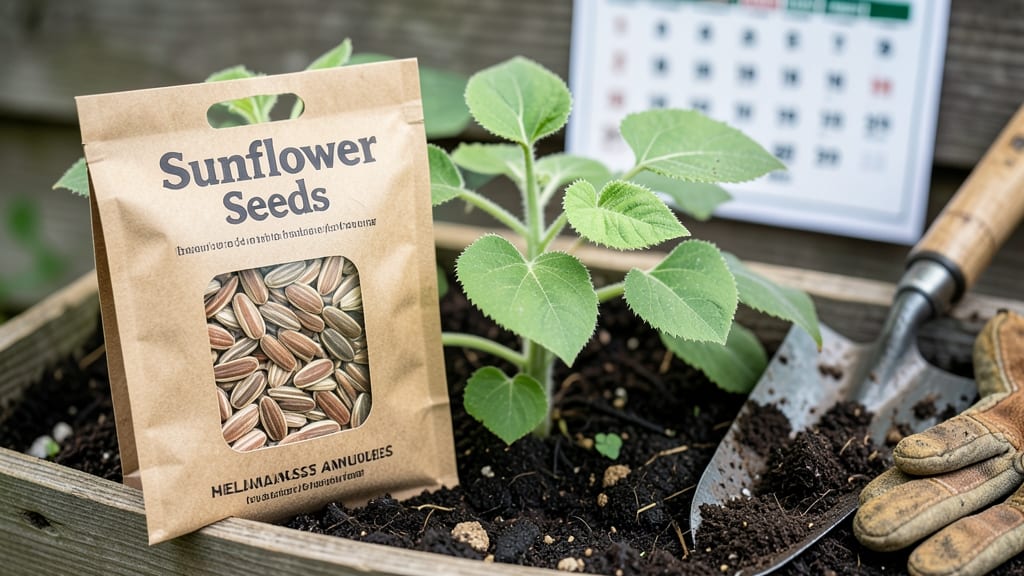
Planting sunflower seeds in Michigan at the wrong time can mean the difference between a sun-drenched garden full of towering 🌻 blooms and a sad, frost-nipped disappointment.
The key window—late April to mid-June—aligns with your USDA 5b-6b zone’s last frost dates and soil warming trends, but even a few weeks off can throw off your harvest.
Most gardeners in Michigan wait until after the average last frost date (around April 15 in southern regions, later in the north) and soil temperatures hit a steady 55-65°F.
That’s when those fast-growing seeds (50-70 days to maturity) really take off, shooting up 3-14 feet in record time. But Michigan’s unpredictable spring weather means you’ve got to stay flexible.
Whether you’re sowing directly into your garden bed or starting indoors for an early edge, timing matters just as much as sunlight exposure.
In this guide, I’ll break down the exact frost-free windows for your region, soil temperature tricks, and how to adjust for Michigan’s unpredictable weather—so your sunflowers get the best possible start.
Ready to turn your garden into a sunflower paradise? Let’s dive into the perfect planting schedule that’ll have your 🌻 thriving from July through October, no matter where in Michigan you’re growing.
Michigan sunflower planting calendar: frost dates & soil temperature guide
Michigan’s USDA Zones 5b-6b mean sunflowers need precise timing to thrive. The last frost date typically falls between April 15 and May 1, depending on your region—southern Michigan can plant earlier, while northern areas should wait.
Aim for soil temperatures above 55°F (measured 2-3 inches deep) to ensure strong germination.
For direct sowing, my rule of thumb is to plant 2-3 weeks after the last frost. This usually lands in late April to early May for most of Michigan.
If you’re using transplants, wait until mid-May when nighttime temperatures consistently stay above 50°F. Always check your local Michigan State University Extension frost maps for the most accurate dates.
Sunflowers are fast growers but sensitive to cold snaps. In Zone 5b (northern Michigan), I recommend waiting until May 15 to avoid late frosts. In Zone 6b (southern Michigan), you can start as early as April 25 if your soil is workable.
Use a soil thermometer to confirm readiness—55-65°F is ideal for germination.
Here’s a quick reference for Michigan’s planting windows by region:
For extended seasons, consider planting a second crop in early July for late summer blooms. Choose fast-maturing varieties like ‘Early Bird’ (50 days) or ‘Teddy Bear’ (60 days) to ensure harvest before the first frost in October.
Always space seeds 6–12 inches apart for dwarf varieties and 18–24 inches for standard sunflowers to prevent overcrowding.
If your soil is still too cold, use a black plastic mulch to warm it faster. I’ve found this raises soil temperatures by 5–10°F in just a few days, giving you an earlier start.
Test your soil’s drainage too—Michigan’s clay-heavy soils can trap moisture, leading to rot. Amend with compost or sand if needed to improve aeration.
Pro tip: Plant sunflowers after warm-season crops like peas or lettuce. These early plants shade the soil, keeping it cooler longer. Once removed, the sun-warmed ground is perfect for sunflower seeds. Always water seeds deeply after planting to encourage strong root development before the heat of summer arrives.
Monitor your local Almanac frost predictions and adjust your timeline accordingly. In 2023, for example, northern Michigan saw a late frost in May, delaying plantings by 2 weeks. Flexibility is key—don’t rush! A healthy sunflower starts with patience and the right timing.
For container growing, plant seeds in May after all frost risk has passed. Use large pots (at least 12 inches deep) and place them in full sun. Containers warm up faster than garden soil, so be ready to water more frequently to prevent drying out.
Remember, sunflowers are resilient but not frost-proof. If a late frost threatens, cover young plants with a
Michigan sunflower planting calendar: frost dates & soil temperature guide
Michigan’s USDA Zones 5b-6b mean sunflowers need precise timing—plant too early, and frost will kill tender sprouts; too late, and your 6-foot-tall giants may never reach their full glory.
The key is waiting until soil temperatures hit 50°F+ and the last frost date has passed (typically mid-April to early May, depending on your region).
For northern Michigan (Zone 5b), aim for late May to ensure warmth-loving sunflowers thrive. In southern Michigan (Zone 6b), you can start as early as early May. Always check your local Michigan State University Extension frost maps for the most accurate dates—these can shift 1-2 weeks yearly.
| Region | Last Frost Date | Ideal Planting Window | Soil Temp Requirement |
|---|---|---|---|
| Northern Michigan (Zone 5b) | Mid-May | Late May – Early June | 55–65°F |
| Southern Michigan (Zone 6b) | Early May | Early May – Mid-June | 50–60°F |
| Michigan’s Thumb (Zone 6a) | Late April | Late April – Early June | 50–65°F |
Use a soil thermometer to confirm readiness—sunflower seeds won’t sprout reliably below 50°F. In Zone 5b, wait until May 15th or later to avoid late spring frosts, which are common. For southern Michigan, you can start as early as April 20th if the ground isn’t frozen.
Pro tip: Plant dwarf varieties like ‘Teddy Bear’ (3–4 ft) earlier in May for a head start, while giant varieties like ‘Mammoth’ (12–14 ft) need the longest, hottest days of June. Adjust your planting window based on the mature height you desire—taller sunflowers need more time to establish.
For extended harvests, consider successive planting in early June for a second flush of blooms. This works especially well in Zone 6b, where the growing season stretches into October.
Just be sure to mark your calendar for the first frost (usually October 15th) to avoid damage to developing seed heads.
Always pair your planting date with a sunny, south-facing location—sunflowers need 6–8+ hours of direct sunlight daily. In Michigan’s cloudy springs, supplement with grow lights if starting indoors, but direct sowing outdoors is easier once the soil warms.