How To
If you're planning your garden layout and wondering how tall bell pepper plants grow, the answer might surprise you—especially when you consider the right varieties for your space.
These vibrant 🌶️ plants can range from compact 1-foot dwarfs to towering 4-foot giants, making them surprisingly adaptable for both small containers and sprawling backyard plots.
The key to controlling their height lies in choosing the right variety and giving them proper support. Standard bell peppers often reach 3-4 feet tall, but bushier types stay under 2 feet, perfect for patio gardens or windowsill growing.
Whether you're working with limited square footage or dreaming of a bountiful harvest, understanding these growth patterns is your first step to success.
Sunlight, soil quality, and even pruning techniques play a huge role in how tall your plants become. With the right care, you can coax even the tallest varieties to stay manageable—or let them grow wild if you have the space.
Let's explore how to make the most of your garden, no matter its size.
From dwarf varieties that fit in a pot to standard types that thrive in raised beds, we'll cover everything you need to know. By the end, you'll have a clear picture of what to expect and how to create the perfect growing conditions for your bell peppers.


Standard bell pepper plant height: what to expect and how it affects your garden
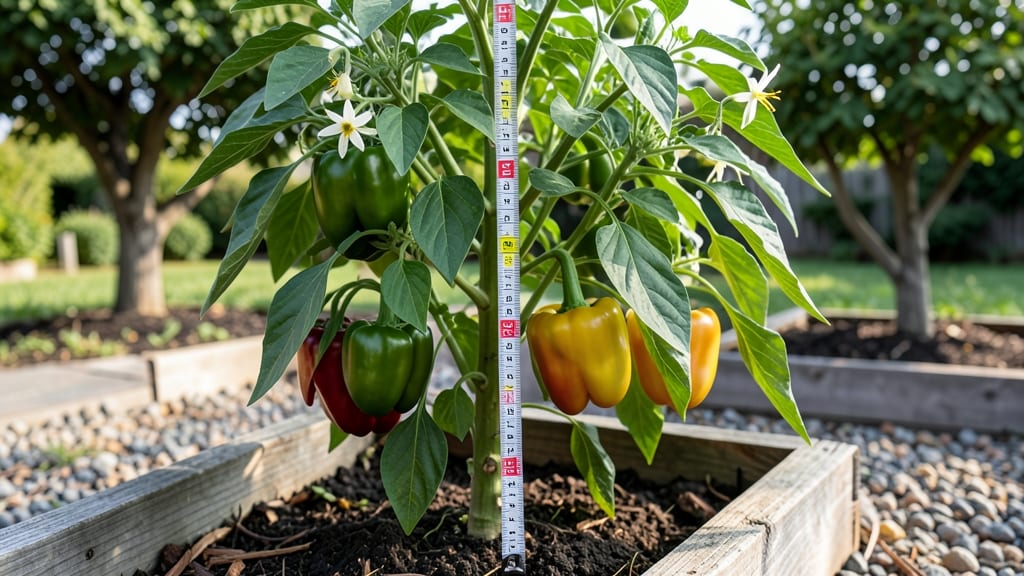
When planning your garden, understanding how tall bell pepper plants grow is essential for maximizing space and productivity. Most standard bell pepper varieties reach heights between 18 to 48 inches at maturity, with some even exceeding 4 feet under ideal conditions.
This range means they can thrive in everything from small containers to spacious backyard plots, but knowing the specifics helps you choose the right spot and support.
The height of your bell pepper plants depends on several factors, including the variety, sunlight exposure, and pruning habits. For example, bush-type varieties typically stay under 2 feet, making them perfect for patio gardens or windowsill growing.
Meanwhile, standard varieties like 'California Wonder' can stretch up to 4 feet, requiring more vertical space or trellising to keep them manageable.
If you're working with limited space, the mature height of your bell peppers will directly impact your garden layout. A 3-foot-tall plant needs at least 18 inches of clearance above it to prevent shading nearby crops.
In contrast, a 2-foot dwarf variety can fit neatly into a 5-gallon container or a raised bed without crowding other plants.
Another critical factor is the growth habit of the plant. Bell peppers grow in an upright, bushy manner, which means they naturally spread out as they mature. Without proper spacing, you risk overcrowding, which can lead to poor air circulation, increased disease risk, and reduced yields.
Aim for at least 18 inches of space between plants in the ground or 12 inches in containers to give them room to thrive.
Sunlight plays a huge role in how tall your bell peppers grow. These plants thrive in full sun (6-8 hours daily), which encourages strong, upright growth. Insufficient sunlight can lead to leggy, weak plants that sprawl outward instead of growing vertically.
If you're growing bell peppers in a shady spot, expect them to stay shorter but also produce fewer peppers.
Soil quality and fertility also influence height. Well-draining, nutrient-rich soil promotes healthy root development, which supports taller growth. If your soil is poor, your plants may remain stunted or produce fewer peppers.
Amending your soil with compost or balanced fertilizer (like 10-10-10) can help your bell peppers reach their full potential height while ensuring a bountiful harvest.
Pruning is another tool to control height and shape. By pinching off the top buds early in the season, you encourage the plant to bush out rather than grow taller. This technique is especially useful for container gardening or when you want to keep plants under 3 feet.
Regular pruning also improves air circulation, reducing the risk of fungal diseases like powdery mildew.
For those with limited vertical space, consider using a trellis or cage to support taller varieties. This not only saves space but also makes harvesting easier.
A simple 5-foot-tall tomato cage can work wonders for bell peppers, guiding their growth upward and keeping them off the ground where pests and diseases lurk.
| Variety Type | Mature Height | Best For | Spacing Needs |
|---|---|---|---|
| Dwarf Varieties | 1-2 ft | Containers, small gardens | 12-18 inches apart |
| Semi-Dwarf Varieties | 2-3 ft | Raised beds, patio gardens | 18-24 inches apart |
| Standard Varieties | 3-4 ft | Backyard plots, trellises | 24-36 inches apart |
Choosing the right bell pepper variety is the first step to controlling height. For example, 'Snackable' and 'Lunchbox' are compact varieties that stay under 2 feet, ideal for small spaces.
On the other hand, 'Big Beautiful' and 'Jupiter' can reach 4 feet or taller, making them better suited for larger gardens or trellised setups.
If you're new to growing bell peppers, start with a mix of dwarf and standard varieties to test what works best in your space. Monitor their growth throughout the season and adjust your care routine as needed.
With the right variety and a little planning, you can enjoy a bountiful harvest without sacrificing your garden's layout.
Remember, the height of your bell pepper plants isn't set in stone—it's influenced by your care and the conditions you provide. By paying attention to sunlight, soil, and pruning, you can guide their growth to fit your garden perfectly.
Whether you're aiming for tall, productive plants or compact, space-saving varieties, the key is to start with the right expectations and adapt as you go.
Standard bell pepper plant height: what to expect and how it affects your garden
When planning your garden, understanding how tall bell pepper plants grow is crucial for maximizing space and productivity. Most standard bell pepper varieties reach heights between 18 to 48 inches, but their growth habits can vary dramatically based on variety, care, and growing conditions.
For example, a 3-foot-tall plant is common for traditional types like 'California Wonder,' while bush varieties often stay under 2 feet—ideal for containers or small plots.
The height of your bell pepper plants directly impacts your garden layout. Taller varieties need more vertical space, making them better suited for trellises or raised beds, while shorter types thrive in pots or tight garden beds.
Even in a 4-foot-tall plant, the spread can be just as important as the height, with some varieties stretching 2 feet wide or more. This means careful planning is key, especially if you're working with limited square footage.
Here’s what you need to know about bell pepper plant heights and how they affect your garden:
| Growth Stage | Height Range | Garden Implications |
|---|---|---|
| Seedling | 6-12 inches | Needs protection from wind; ideal for transplanting when sturdy. |
| Mature Standard | 3-4 feet | Requires trellis or support; spacing 18-24 inches apart. |
| Mature Dwarf | 1-2 feet | Perfect for containers; spacing 12-18 inches apart. |
| Bush Varieties | 2-3 feet | Compact growth; ideal for small gardens or companion planting. |
| Pro Tip | Prune early to control height and encourage bushier growth with more peppers! | |
Sunlight plays a major role in how tall your bell pepper plants grow. While they thrive in full sun (6-8 hours daily), insufficient light can stunt growth, leading to leggy, weak plants that struggle to support their own weight.
If you notice your plants stretching toward the light, it’s a sign they need more sunlight or a grow light indoors. Conversely, too much shade can reduce fruit production and cause plants to stay shorter than expected.
Soil quality and nutrients also influence height. Well-draining, nutrient-rich soil with a pH of 6.0-6.8 supports healthy growth, while poor soil can lead to stunted plants. Adding compost or a balanced fertilizer during the growing season can help your bell peppers reach their full potential height.
Remember, taller plants often produce more peppers, but only if they’re given the right conditions to thrive.
If you're growing bell peppers in containers, choose pots that are at least 12 inches deep to accommodate root growth, even for dwarf varieties. Containers dry out faster, so monitor soil moisture closely and water deeply when the top inch feels dry.
With the right care, even compact varieties can produce a surprising number of peppers, making them a great choice for balconies or patios.
For gardeners with limited space, pruning is your best friend. Regularly pinch off the tips of new growth to encourage bushier, more compact plants. This not only controls height but also redirects energy toward fruit production.
Just be sure to prune in the morning to allow wounds to heal before evening moisture sets in.