
Plants
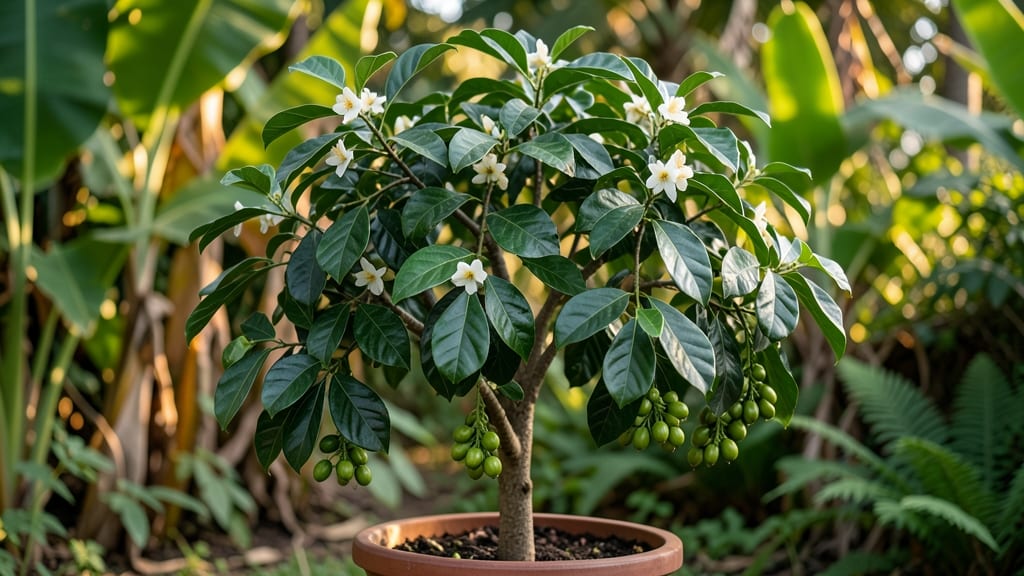
If you’re wondering how tall does a coffee plant grow, you might be surprised—because some varieties can stretch taller than your garage door!
The height of your coffee plant depends entirely on its type, with Arabica typically reaching 10-15 feet while Robusta can tower up to 30 feet in ideal tropical conditions.
But here’s the good news: not all coffee plants demand a jungle. Whether you’re working with General (Tropical/Subtropical Regions) climates or container gardening, understanding the growth patterns of each variety is the key to fitting them into your space—without sacrificing productivity.
In this guide, I’ll break down exactly how tall coffee plants grow by variety, including the fastest-growing types and how pruning can keep them manageable. You’ll also discover whether dwarf varieties exist (and why they’re a game-changer for small spaces).
Ready to plan your coffee garden? Let’s dive into the heights, timelines, and tips to grow the perfect plant—no matter how much (or little) space you have.


Coffee plant height by variety: from dwarf to giant trees
Coffee plants are famous for their striking heights, but not all varieties reach skyscraper proportions. The Arabica variety, known for its delicate flavor, typically grows between 10 to 15 feet at maturity, while Robusta plants can tower up to 30 feet in ideal tropical conditions.
Liberica, the rarest type, often exceeds 20 feet with its broad canopy. Understanding these differences is key to planning your garden layout or container setup.
For home gardeners, space constraints are real. Most traditional coffee plants need 6-10 feet of vertical clearance to thrive, making them unsuitable for small patios or urban balconies. However, specialized dwarf varieties (like 'Nana' Arabica) can stay under 4-5 feet when properly pruned—ideal for container growing.
The right variety can turn your coffee obsession into a reality, even in limited spaces.
Here’s how the most popular coffee varieties compare in terms of height and space needs:
If you’re growing Arabica or Robusta in your backyard, plan for a 10-foot-tall plant at minimum—think basketball hoop height. These varieties thrive when given room to spread their broad canopies, which can reach 6–10 feet wide.
For Liberica, expect a true jungle giant that needs full sunlight and high humidity to reach its towering potential.
Pruning plays a crucial role in managing height. Regular tip pruning (cutting back new growth by 1/3) keeps coffee plants bushier and more manageable. I’ve found that pruning in late winter encourages denser foliage and better fruiting the following season.
Just avoid heavy pruning during flowering or fruiting periods, as this can reduce your yield.
For container growers, dwarf varieties are a game-changer. A 5-gallon pot can comfortably house a dwarf Arabica for years, provided you use a well-draining potting mix and fertilize regularly. These compact plants still produce high-quality beans, though yields will be smaller than their full-sized counterparts.
The trade-off? You get the joy of coffee without sacrificing your porch space.
Climate also influences height. In tropical regions like Hawaii or Puerto Rico, coffee plants grow 20–30% taller due to year-round warmth and high humidity. In subtropical zones (like parts of California or Florida), growth slows slightly, but with proper care, you can still achieve 15–20 feet of height.
If you’re in a cooler microclimate, consider growing coffee in containers that you can move indoors during winter.
One common misconception is that all coffee plants need to be tall and wild to produce good beans. In reality, well-pruned plants—even dwarf varieties—can yield high-quality coffee with proper care. The key is balancing height control with fruit production.
I’ve experimented with espalier training (tying branches to a trellis) to keep plants under 6 feet while maximizing bean output—a technique worth trying if space is limited.
Whether you’re dreaming of a backyard coffee grove or a patio-sized plant, choosing the right variety is the first step. Start with Arabica for flavor or Robusta for hardiness, and don’t overlook the potential of dwarf cultivars if you’re working with limited space.
With the right approach, you can enjoy homegrown coffee—no jungle required.
How fast do coffee plants grow? Height timeline by stage
Coffee plants don’t grow overnight—they’re patient climbers that reward your wait with lush foliage and fragrant blossoms before producing cherries. In their first year, expect 2-4 feet of growth, which may seem modest but sets the foundation for their future height.
The key to faster growth lies in optimal conditions: well-draining soil, partial shade, and consistent moisture.
By year two, your coffee plant will double or triple in height, reaching 6-10 feet if given ideal care. This is when you’ll notice the plant developing its characteristic broad leaves and sturdy branches.
Pruning lightly during this stage helps shape the plant and encourages bushier growth rather than a single tall stem.
🌱
Once your coffee plant reaches year three or beyond, it’s officially a tall, established shrub or small tree. At this stage, Arabica varieties typically max out around 10-15 feet, while Robusta and Liberica can soar to 20-30 feet if unpruned.
This is when you’ll see the first coffee cherries—a reward for your patience!
Pruning plays a critical role in managing height. In tropical climates, prune lightly after harvest to remove dead branches and encourage new growth. In cooler subtropical zones, a winter pruning session helps shape the plant and prevent it from becoming too top-heavy.
Always use sterilized tools to avoid disease spread.
Climate dramatically impacts growth speed. In tropical regions with year-round warmth, coffee plants grow faster and taller, while in subtropical zones with cooler winters, growth may slow or pause entirely.
For example, a coffee plant in Hawaii (USDA Zone 10-12) might reach 10 feet in just 2 years, whereas one in Florida’s inland areas (Zone 9) may take 3-4 years to reach the same height.
🌿