
Plants
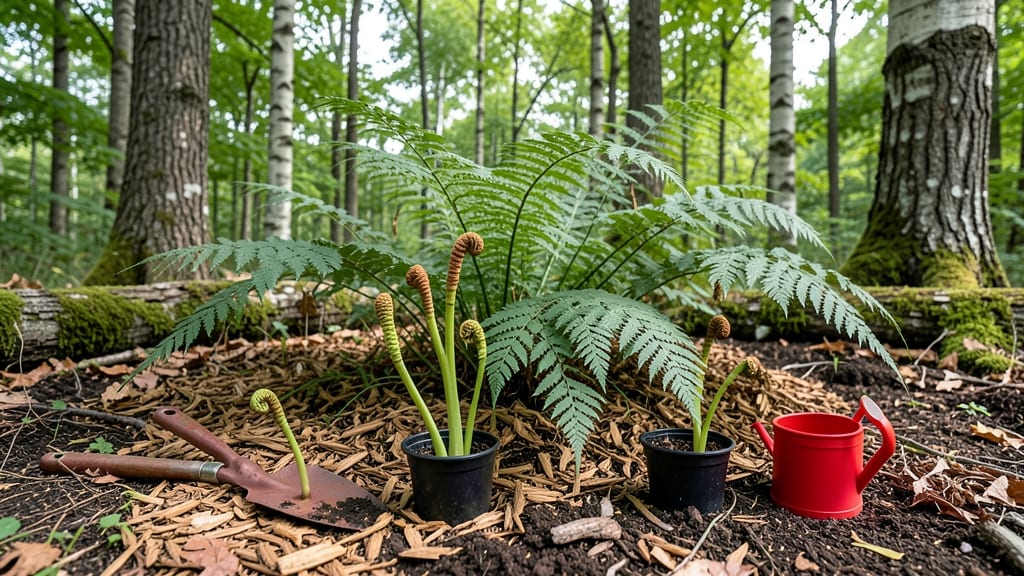
Planting ferns in Michigan at the wrong time can leave you with wilted, struggling plants instead of the lush, vibrant foliage you imagine.
The key to success lies in understanding when soil temperatures rise enough to support root growth—typically after your last frost date, which varies across the state's 5b-6b zones.
Most Michigan gardeners find their best window opens in late April to early May, when daytime temperatures consistently stay above 55°F. But don't wait too long—planting in June might mean your ferns miss out on establishing strong roots before summer heat arrives.
The early fall (September) also works if you prefer a cooler planting experience.
Why does timing matter so much? Ferns thrive in moist, shaded conditions, and Michigan's spring weather can be unpredictable—too early, and frost will damage tender new growth; too late, and your plants may struggle to adapt.
I'll walk you through exactly how to check your soil's readiness and avoid common mistakes that trip up even experienced gardeners.
With the right approach, you'll have ferns that flourish year after year—adding that perfect 🌿 touch to your garden's shady corners. Let's get those roots growing strong from day one.
Michigan’s ideal soil temperature and frost-free timeline for planting ferns
Timing your fern planting in Michigan depends on two key factors: soil temperature and frost-free dates. Ferns thrive when soil warms to 55–65°F, signaling roots can establish without risking frost damage.
In Michigan’s USDA zones 5b–6b, this typically aligns with late April to early May in most regions, but microclimates—like urban heat islands or sheltered valleys—can shift these windows by 1–2 weeks.
Use a soil thermometer to confirm readiness: insert it 4–6 inches deep (where fern roots grow) and wait until temperatures consistently stay above 55°F. Cold, wet soil in early spring can suffocate roots, leading to root rot or stunted growth.
Patience here pays off—waiting for the right conditions ensures your ferns take off in Michigan’s humid summers.
Michigan’s frost-free dates vary sharply between the Upper and Lower Peninsulas. The Lower Peninsula (e.g., Detroit, Grand Rapids) usually sees its last frost by mid-April, while the Upper Peninsula (e.g., Marquette, Houghton) can linger until late May.
Check the USDA Plant Hardiness Zone Map for your exact location, then add 2–3 weeks to account for late frosts.
For extra precision, consult your local Michigan State University Extension office or use tools like the National Oceanic and Atmospheric Administration (NOAA) frost prediction maps. These resources provide hyperlocal data tailored to your county, helping you avoid the #1 mistake: planting too early in cold, damp soil.
A pro tip: if you’re eager to start, consider container-grown ferns. They warm up faster than bare-root plants and can be moved indoors if frost threatens. This method buys you 2–4 extra weeks of planting flexibility, perfect for Michigan’s variable springs.
🌱
| Factor | Michigan Timeline | Actionable Tip |
|---|---|---|
| Soil Temperature | 55–65°F (late April–early May) | Use a soil thermometer 4–6" deep |
| Last Frost Date |
Lower Peninsula: mid-April Upper Peninsula: late May |
Add 2–3 weeks buffer for safety |
| Frost-Free Window | 140–160 days (April–October) | Plant by May 15 for full-season growth |
| Alternative Window | Early Fall (September) | Soil temps drop below 60°F by October |
While spring planting is ideal, Michigan gardeners can also plant ferns in early fall (September) for a head start on next year’s growth. Aim to plant 6–8 weeks before your first frost—this gives roots time to establish before winter dormancy.
Fall-planted ferns often emerge 2–3 weeks earlier in spring, giving you a competitive edge in Michigan’s short growing season.
For container ferns, extend your planting window even further. Since pots warm up faster, you can start as early as March in the Lower Peninsula or April in the Upper Peninsula, provided you’re prepared to protect them from late frosts with frost cloth or row covers.
This early start can mean lush, established ferns by June, ready to handle Michigan’s humid summers.
Monitor your local Almanac frost predictions and adjust your timeline accordingly. For example, if your area has a history of late May frosts, wait until early June to plant outdoors. Potted ferns give you the flexibility to delay planting until conditions are perfect, reducing the risk of frost damage.
🌿
Don’t overlook microclimates in Michigan. Urban areas like Ann Arbor or Kalamazoo often experience warmer soil temperatures due to pavement and buildings, while rural areas may stay cooler longer.
Observe your garden’s specific conditions for 1–2 weeks before planting to spot patterns. For instance, a north-facing slope might stay frost-prone longer than a south-facing garden bed.
If you’re unsure about your local conditions, conduct a simple soil temperature test for 3 consecutive days. Record morning and evening temps—if they’re consistently above 55°F, it’s safe to plant. This method eliminates guesswork and ensures your ferns get the ideal start they need to thrive in Michigan’s climate.
Step-by-step checklist: when and how to plant ferns in Michigan’s climate
Michigan’s clay-heavy soil and humid summers demand extra prep work before planting ferns. Start by testing your soil’s pH (5.5–6.5)—ferns thrive in acidic conditions. If your soil is too alkaline, amend it with peat moss or pine needles to create the ideal environment for root growth.
Choose shade-tolerant varieties like Matteuccia struthiopteris (ostrich fern) or Dryopteris marginalis (marginal wood fern), which handle Michigan’s partial shade beautifully. These species also tolerate Michigan’s wetter springs better than sun-loving ferns.
🌿
After planting, monitor your ferns for yellowing fronds, which may signal overwatering or poor drainage. In Michigan’s humid climate, ensure containers have drainage holes and avoid letting ferns sit in standing water.
Fertilize lightly in early spring and fall with a balanced, acid-loving fertilizer (5-10-10) to support steady growth.
For container-grown ferns, move pots to a shaded patio during Michigan’s late-spring heatwaves (June–July) to prevent leaf scorch. Regularly check soil moisture—potted ferns dry out 3x faster than in-ground plants due to limited root access to water.
🌳