
Plants
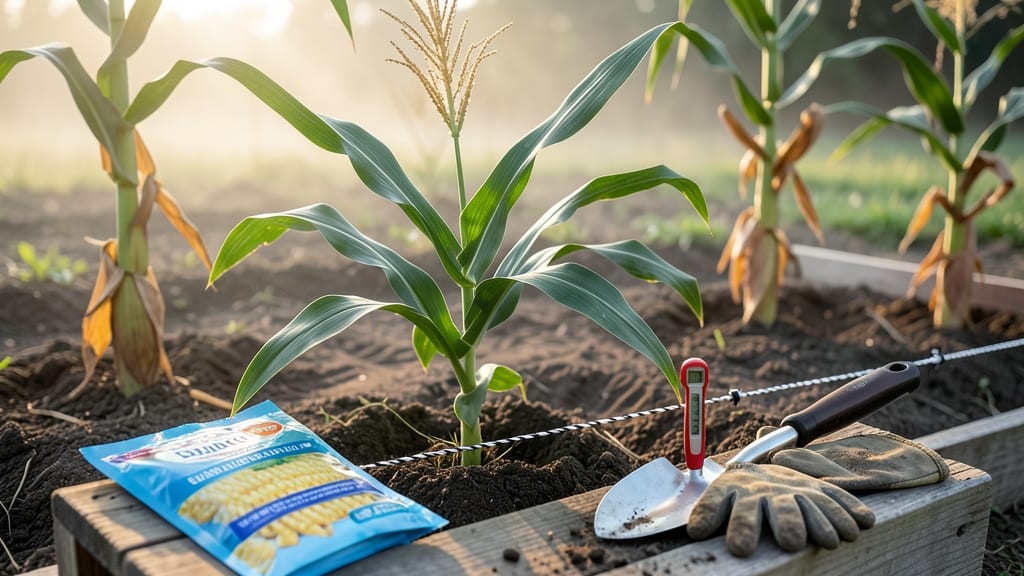
Planting corn in Vermont at the wrong time can mean the difference between a towering 🌽 harvest and a sad, frost-bitten disappointment.
The perfect window—when soil warms to 60°F and last frost passes—usually falls between mid-May and early June, but Vermont’s fickle weather demands more than just a calendar date.
Why does timing matter so much? Corn is sensitive to cold snaps, and planting too early risks stunted growth, while waiting too long cuts your harvest short.
In USDA zones 5b-6a, where summers are short but sweet, choosing the right variety—whether it’s 60-day sweet corn or 100-day dent corn—can extend your growing season and protect your crop from Vermont’s infamous late frosts.
I’ve learned the hard way that even experienced gardeners in this region often misjudge the moment. Should you go with early varieties to beat the clock, or play it safe with mid-season stalwarts?
And what if the weather throws you a curveball? Let’s break down the exact strategies to plant corn for a reliable harvest, no matter what Mother Nature throws your way.
From soil temperature tricks to frost-proofing tips, you’ll discover how to turn Vermont’s unpredictable spring into your corn’s best ally. Ready to grow a garden-worthy harvest? Let’s get started.
Vermont’s frost-free planting windows for corn by variety (2024 guide)
Vermont’s USDA Zones 4-5 mean corn planting requires precision—one late frost can ruin your entire crop. Unlike warmer climates, Vermont’s last average frost date varies from May 10-20 depending on microclimates, with the Champlain Valley typically warming 1-2 weeks earlier than the Northeast Kingdom.
To succeed, align your planting with soil temperatures (corn needs ≥50°F) and heat-unit requirements for your chosen variety.
Sweet corn, the most popular choice, thrives in Vermont’s short season when planted at the optimal window of mid-May to early June. However, popcorn and dent corn varieties can tolerate slightly later starts, thanks to their longer maturity times.
The key is understanding how frost-free days (typically 165 days in Vermont) interact with your variety’s days to maturity—a mismatch means missed harvests.
For example, ‘Early Sunglow’ sweet corn (60 days to harvest) can be planted as early as late April in warmed soil, while ‘Bodacious’ (90 days) needs to hit the ground by mid-May. Dwarf varieties like ‘Golden Bantam’ (75 days) offer flexibility for succession planting or container growing in urban gardens.
| Variety Type | Days to Maturity | Optimal Planting Window | Soil Temp Requirement | Notes for Vermont |
|---|---|---|---|---|
| Sweet Corn (e.g., 'Early Sunglow') | 60-70 days | Late April–May 10 | ≥50°F | Best for early harvests; use row covers if late frost risk. |
| Sweet Corn (e.g., 'Bodacious') | 85-95 days | May 10–20 | ≥55°F | Standard choice; plant after last frost in Champlain Valley. |
| Popcorn (e.g., 'Country Gentleman') | 90-100 days | May 1–May 15 | ≥50°F | Tolerates cooler soils; great for Northeast Kingdom. |
| Dent Corn (e.g., 'Mira') | 100-110 days | April 25–May 10 | ≥50°F | Plant early; needs full season to mature in Zone 4. |
| Dwarf Corn (e.g., 'Golden Bantam') | 75-80 days | May 15–June 1 | ≥55°F | Ideal for containers or late starts; shorter stature. |
Vermont’s microclimates play a huge role in success. The Champlain Valley (e.g., Burlington) often sees its last frost by May 10, while the Green Mountains can linger until May 25. Use local frost data from the Vermont Weather Underground or UVM Extension to fine-tune your dates.
For example, if you’re in St. Johnsbury, wait until May 20 to plant ‘Bodacious’, but you could try ‘Early Sunglow’ as early as May 5 with row covers.
Another critical factor is heat-unit accumulation. Corn requires 2,500–3,000 growing degree days (GDD) to mature. In Vermont, this translates to planting sweet corn by June 1 if your spring was cool.
Use the GDD calculator from Cornell University to track progress—if your plants are 6 inches tall by June 20 but still not tasseling, you may need to replant a shorter variety.
For succession planting, stagger varieties every 2 weeks from May 1–June 15. This ensures a continuous harvest through September. For instance, plant ‘Early Sunglow’ on May 1, ‘Bodacious’ on May 15, and ‘Golden Bantam’ on June 1.
This strategy maximizes your 165 frost-free days and reduces waste.
If you’re in Zone 4 (northern Vermont), prioritize early-m
How to adjust corn planting dates for Vermont’s unpredictable weather patterns
Vermont’s weather can shift faster than you can say “late frost,” so flexibility is key when planting corn. If you’re starting seeds indoors or outdoors, soil temperature is your best guide—not the calendar.
Corn needs soil at least 60°F for consistent germination, and Vermont’s last frost often lingers into mid-May, with exceptions in colder microclimates like the Northeast Kingdom.
To beat the clock, I’ve found that cold-hardy varieties like ‘Early Sunglow’ (60-day maturity) or ‘Golden Bantam’ (80 days) are my go-tos. These can handle slightly cooler soils and still reach maturity before Vermont’s first frost in mid-October.
For regions like the Champlain Valley, where summers are warmer, you might push planting into early June for longer-season varieties like ‘Silver Queen’ (110 days).
🌽 Pro Tip: Use a soil thermometer to confirm readiness. If your soil is below 60°F, wait—corn seeds won’t sprout reliably in cooler conditions. Patience now means fewer replants later.
- 1 Row Covers: Use floating row covers to protect seedlings from late frosts. Remove when plants reach 12 inches tall to avoid overheating.
- 2 Succession Planting: Sow short-season varieties every 2 weeks from mid-May to early June. This stretches your harvest from late August to October.
- 3 Soil Warming: Cover beds with black plastic mulch 2 weeks before planting to raise soil temperature. This trick can shave off critical days before germination.
- 4 Heat Units Calculator: Vermont’s growing degree days (GDD) average 2,000–2,500. Choose varieties with GDD requirements matching your region (e.g., 1,800 GDD for ‘Early Sunglow’).
- 5 Replant Strategy: If frost nips seedlings, replant with fast-maturing varieties (60–70 days). Even a 2-week delay can work if you choose wisely.
What if your planting window slips? Don’t panic. If you miss the ideal mid-May to early June window, opt for 60-day varieties and plant as soon as soil warms. For example, ‘Ambrosia’ (70 days) can still mature if planted by late May in the Champlain Valley.
In colder areas, stick to 50-day varieties like ‘Peaches and Cream’ for a quick harvest.
For late starters, container growing is another lifesaver. Use 5-gallon buckets filled with warm compost to grow dwarf varieties like ‘Golden Midget’ (70 days). These can be moved to sunnier spots or even brought indoors on cool nights if needed.
🌿 Remember: Vermont’s microclimates vary wildly. A south-facing slope in Burlington might warm up faster than a valley in Stowe. Scout your garden early and adjust your planting date accordingly—even a few days can make the difference between a thriving crop and a frost-killed disappointment.