
Plants
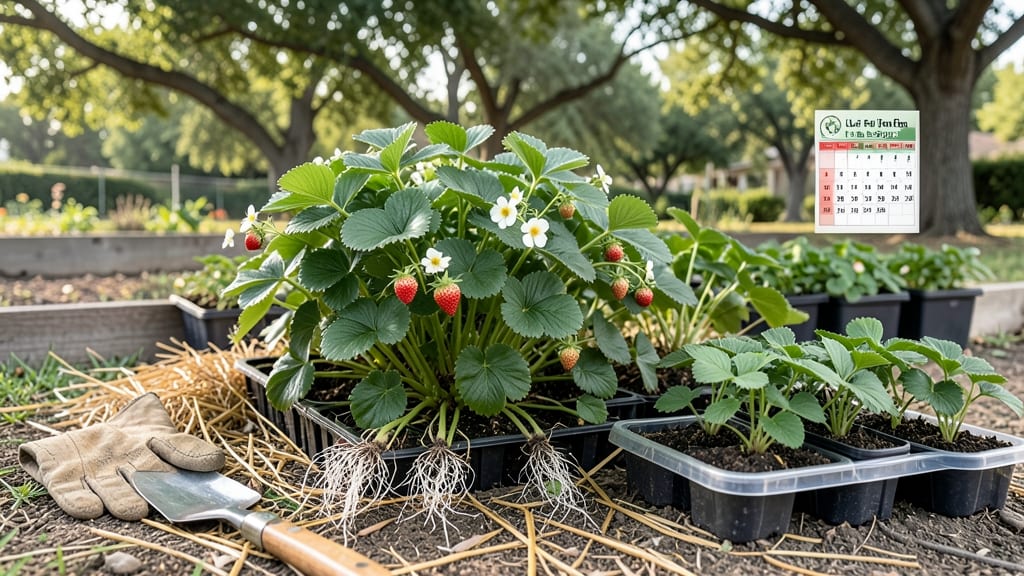
Planting strawberries in California isn’t just about grabbing a 🍓 plant and sticking it in the ground—it’s about outsmarting the state’s wild temperature swings from coastal chill to inland heat.
Whether you’re in frost-prone valleys or frost-free deserts, timing your transplant can mean the difference between a bountiful harvest and a sad, wilted disappointment.
Most gardeners in zones 8-11 (especially coastal areas like 9b-10) know fall is the sweet spot, but inland valleys and high-elevation spots have their own rules.
I’ve learned the hard way that planting too early in the Central Valley risks frost damage, while waiting too long in desert climates can leave your berries struggling in the heat.
What if you could pinpoint the exact window for your microclimate? I’ll break down the year-round planting strategy that works for California’s diverse regions—from bare-root prep to choosing the right everbearing or June-bearing varieties. Let’s get those strawberries in the ground at the perfect moment for your location.
The key isn’t just the calendar—it’s understanding how your local frost dates, soil warmth, and even afternoon fog affect your plants. By the end, you’ll know exactly when to plant for zero-frost success, whether you’re in the Bay Area, the Central Valley, or the desert.
Ready to turn your strawberry patch into a year-round treasure?
California’s 5 microclimate planting zones for strawberries (with exact deadlines)
California’s strawberry planting success hinges on understanding its 5 distinct microclimates. Coastal areas like San Francisco enjoy year-round growing, while the Central Valley faces late-winter frosts. Each zone demands precise timing to avoid frost damage or heat stress.
Let’s break down the ideal planting windows and variety recommendations for each region to ensure your berries thrive.
For coastal California (e.g., Santa Cruz, Monterey), plant bare-root strawberries from October through March. The mild winters and no frost risk make this the safest window. Inland valleys like Fresno or Bakersfield should aim for November to February, avoiding December-January frosts.
Desert regions (e.g., Palm Springs) can plant year-round, but fall (September-October) is best for escaping summer heat.
High-elevation areas like Mount Shasta (USDA Zone 7) have a shorter frost-free season. Plant June-bearing varieties in early spring (March-April) to harvest before first frost. Meanwhile, fog-prone zones (e.g., San Francisco Bay Area) benefit from winter planting (December-January), leveraging cooler temps and moisture.
🌱
Each zone’s soil prep is critical. Coastal areas need well-draining soil to prevent rot, while inland valleys benefit from raised beds to escape frost pockets.
Desert regions require shade cloth and drip irrigation to combat intense sun. High-elevation gardens should use cold frames for June-bearing varieties to extend the season.
For everbearing varieties like Seascape, plant in fall (October-November) to harvest year-round. June-bearing types (e.g., Chandler) thrive with spring planting (March-April) in cooler zones. Always check local frost dates via the CIMIS weather station to fine-tune your schedule.
🌿
Pro tip: Use mulch (straw or pine needles) to regulate soil temperature and retain moisture. This is especially vital in desert climates where temperature swings can stress young plants. Pair your variety choice with the microclimate—Albion for cold snaps, Portola for heat.
💧
Now that you’ve got your planting zone and deadlines locked in, the next step is adjusting for <
How to adjust planting dates for unpredictable California weather (frost alerts & heatwaves)
California’s weather is famously unpredictable—one day it’s 75°F sunshine, the next a 32°F frost warning. For strawberries, these swings mean the difference between a bountiful harvest and a wilted disaster.
Unlike other plants, strawberries are frost-sensitive but also heat-stressed in summer. The key? Adjusting your planting timeline based on real-time weather data, not just the calendar.
Start by checking the CIMIS weather stations (run by UC Agriculture) for your exact location. These provide localized frost alerts and soil temperature data—critical for strawberries, which thrive when soil stays above 40°F.
For example, in the Central Valley, late October plantings often fail due to December frosts, while coastal areas can plant as late as January without risk.
⚠️ Frost Alert: Emergency Hardening for Late Plantings
If you miss the ideal window but still want to plant, use these emergency hardening techniques to protect young strawberries:
- Cold Acclimation: Gradually expose plants to 45°F nights for 1 week before transplanting.
- Row Covers: Use frost cloth (rated for 28°F) over beds on nights below 40°F.
- Mulch Thickly: Apply 4–6 inches of straw to insulate roots—critical for Central Valley and high-elevation areas.
- Avoid Watering: Wet leaves freeze faster; water deeply 2 days before a frost warning.
🌡️ Pro Tip: Set a phone alert for CIMIS frost watches in your county—it’s your early warning system!
Heatwaves are just as dangerous. Strawberries planted in late spring (April–May) often suffer from sun scorch and poor fruiting when summer temps exceed 85°F. If you’re in the Desert Southwest (e.g., Palm Springs), opt for fall planting (August–September) to avoid peak heat.
For coastal fog zones (like San Francisco), you can push plantings into early spring (February–March) thanks to moderating ocean breezes.
Soil thermometers are your best friend. Strawberry roots need soil temps between 40°F–70°F to establish. If your soil is below 40°F, wait—even bare-root plants will struggle.
In high-elevation areas (e.g., Mount Shasta), aim for May plantings to avoid late-spring frosts, while low deserts (e.g., Coachella Valley) can plant year-round with shade cloth in summer.
For container growers, flexibility is easier. Move pots to shaded patios during heatwaves or covered porches during frost watches. Just ensure containers have drainage holes—strawberries rot in soggy soil, even in cold weather.
If you’re in Zone 10+ (e.g., Los Angeles), you can plant everbearing varieties like Seascape in January for a spring harvest before summer slows growth.
Remember: No rule is absolute. I’ve seen June-bearing strawberries thrive in San Diego’s fall plantings and day-neutral varieties struggling in Sacramento’s summer heat. The secret? Monitor, adapt, and protect. Use local weather tools, adjust your timeline, and don’t hesitate to harden or cover plants when surprises hit.