
Plants
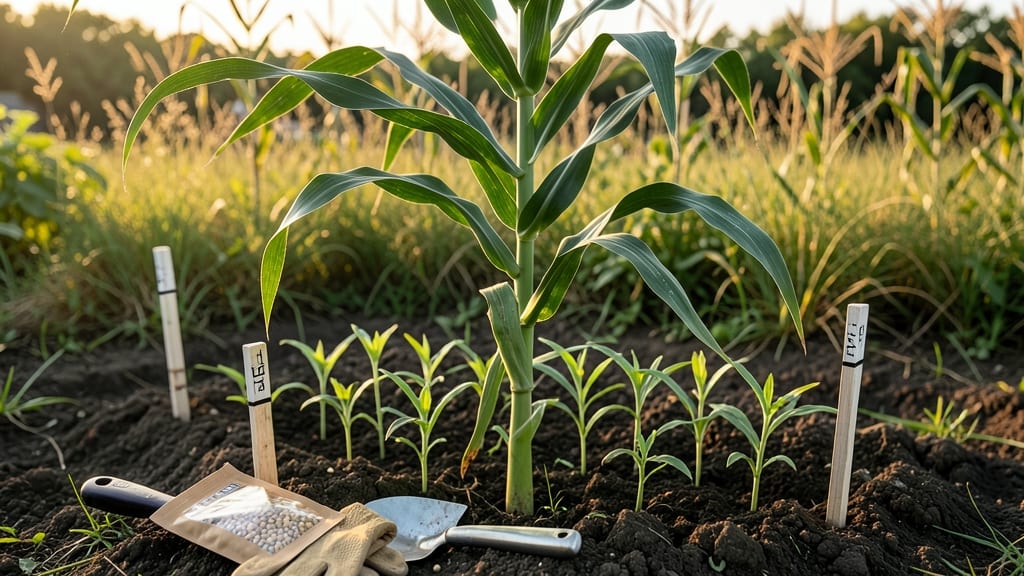
Planting corn in North Carolina at the wrong time can mean the difference between a bumper crop of 🌽 and wasted seeds. The ideal window—mid-April to early June—aligns with soil temperatures hitting that sweet spot of 60°F+, ensuring strong germination and vigorous growth before summer heat sets in.
But here’s the catch: your exact planting date depends on your zone within NC’s 7a-8b range, where last frost dates can shift by weeks. Too early, and frost zaps tender seedlings; too late, and you’ll miss the 70-120-day growing window needed for harvest.
Let’s break down the science-backed timeline so you can time it perfectly.
Whether you’re growing sweet corn for summer meals or field corn for livestock, understanding your local microclimate is key. We’ll cover everything from adjusting for cool springs to extending the season with row covers—so you can avoid common mistakes and maximize your yield.
Ready to go from seed to stalk with confidence? I’ll walk you through the exact steps, including soil prep, spacing secrets, and when to watch for those telltale silks turning brown. Let’s get your corn off to the best possible start!
North Carolina corn planting timeline by Zone: frost-free dates & soil temperature rules
North Carolina’s diverse growing zones (from 5a in mountains to 8b along coast) create unique planting windows for corn. Unlike many crops, corn thrives when soil temperatures consistently stay above 50°F, with 60°F+ being ideal for germination.
My experience shows that planting too early—before the last frost—often leads to stunted growth, while waiting too long risks heat stress before harvest.
For sweet corn varieties like ‘Silver Queen’ or ‘Peaches and Cream’, the window is tighter—typically April 15 to May 15 in most zones. Field corn varieties (e.g., ‘Pioneer 33B11’) can handle later plantings, often until June 1, but require longer growing seasons.
Let’s break down the exact dates for each zone, including frost-free averages and soil temperature triggers.
🌱 Key Rule: Always wait until soil reaches 60°F at 4-inch depth—use a soil thermometer! In my Zone 7a garden, this usually happens by mid-April, but mountain zones (5a) may need to wait until late May. Coastal areas (8a/8b) can start as early as March 15 for early varieties.
North Carolina Corn Planting Summary by Zone
| Zone | Last Frost Date | Ideal Planting Window | Soil Temp Requirement | Sweet Corn Varieties | Field Corn Varieties |
|---|---|---|---|---|---|
| 5a (Mountains) | May 10 | Late May to June 1 | 60°F+ (wait until June) | ‘Early Sunglow’ (65 days) | ‘Pioneer 33B11’ (110 days) |
| 6a (Piedmont) | April 15 | April 20 to May 10 | 55°F+ (germinates at 50°F) | ‘Peaches and Cream’ (75 days) | ‘DeKalb 56-20’ (100 days) |
| 7a (Central NC) | April 1 | April 15 to May 15 | 60°F+ (optimal for growth) | ‘Silver Queen’ (80 days) | ‘Golden Bantam’ (90 days) |
| 7b (Coastal Plain) | March 25 | March 30 to April 30 | 50°F+ (early start possible) | ‘Ambrosia’ (70 days) | ‘Mo17’ (105 days) |
| 8a/8b (Coastal) | March 15 | March 20 to May 1 | 55°F+ (humidity speeds germination) | ‘Bodacious’ (85 days) | ‘Pioneer 3906’ (115 days) |
*Days to maturity based on NC State Extension data
I’ve learned that coastal zones (8a/8b) often get a 2-3 week head start compared to mountain zones (5a). For example, in Zone 8a, I plant ‘Bodacious’ sweet corn by March 20 for a July harvest, while in Zone 6a, I wait until April 20 to avoid frost.
The humidity in coastal areas also speeds up germination, so seeds sprout faster at 55°F than in drier inland zones.
For field corn varieties, which take 100+ days to mature, I recommend planting no later than June 1 in most zones. In my Zone 7a garden, I’ve successfully grown ‘Pioneer 33B11’ when planted in late May, but yields drop if planted after June 10.
Field corn handles hotter soils better than sweet corn, making it ideal for summer plantings.
One critical mistake I’ve seen gardeners make is relying on air temperature instead of soil temperature. For example, a 70°F day in March won’t help if the soil is still 45°F.
Always check soil temp at 4-inch depth in the morning. I use a digital soil thermometer ($15 on Amazon) to track this daily until planting.
If you’re in Zone 5a or higher elevations, consider using black plastic mulch to warm the soil faster. I’ve raised soil temps by 10°
Sweet corn vs. field corn planting: key differences in North Carolina’s climate
North Carolina’s humid summers and mild winters create perfect conditions for both sweet corn and field corn, but their planting strategies differ dramatically.
Sweet corn—like ‘Silver Queen’ or ‘Peaches and Cream’—demands earlier starts to mature before heat stress sets in, while field corn varieties (e.g., ‘Pioneer 33B11’) thrive with later plantings and longer growing seasons. The key? Matching your variety to NC’s 180-220 frost-free days and humidity levels.
Sweet corn needs 60-70 days to harvest, so I plant mine between mid-April and late May in most of NC’s 7a-8b zones. Field corn, however, can wait until late May to early June because it takes 90-120 days to mature.
This delay helps avoid early-season pests like corn earworm, which thrive in NC’s heat.
Pros:
- Faster harvest (60-70 days)
- Better for home gardens (smaller plants)
- Earlier planting (avoids summer pests)
Cons:
- Shorter season (risk of frost)
- Lower yield per plant
- More susceptible to drought
Pros:
- Longer growing season (90-120 days)
- Higher yield per plant
- Drought-tolerant (better for NC summers)
Cons:
- Later harvest (risk of early frost)
- Larger space needed
- Attracts more pests (e.g., raccoons, deer)
Spacing is another critical difference. Sweet corn needs 12-18 inches between plants in rows 30 inches apart to prevent disease spread, while field corn can stretch to 24-36 inches apart in rows 36 inches apart.
In NC’s humid climate, tight spacing for sweet corn accelerates fungal diseases like gray leaf spot, so I always prioritize airflow.
NC’s high humidity also affects maturity—sweet corn may develop off flavors if planted too late (after June 1 in most zones), while field corn benefits from the extra heat.
For example, I’ve had ‘Bodacious’ sweet corn bolt prematurely in Zone 8b when planted after May 15, but ‘Pioneer 3906’ field corn thrived with a June 10 start.
Pro tip: Use succession planting for sweet corn every 2 weeks from April to June to stagger harvests. Field corn, however, should be planted all at once for uniform maturity.
In Zone 7a, I’ve found that planting field corn by June 1 ensures ears mature before the first frost in mid-October.
Don’t overlook soil prep—both types need well-draining, fertile soil with a pH of 6.0-6.8. I amend mine with compost and a 10-10-10 fertilizer at planting, then side-dress with nitrogen-rich fertilizer when tassels emerge. This extra care pays off, especially in NC’s clay-heavy soils.
🌽